Middlemarch at Midlife

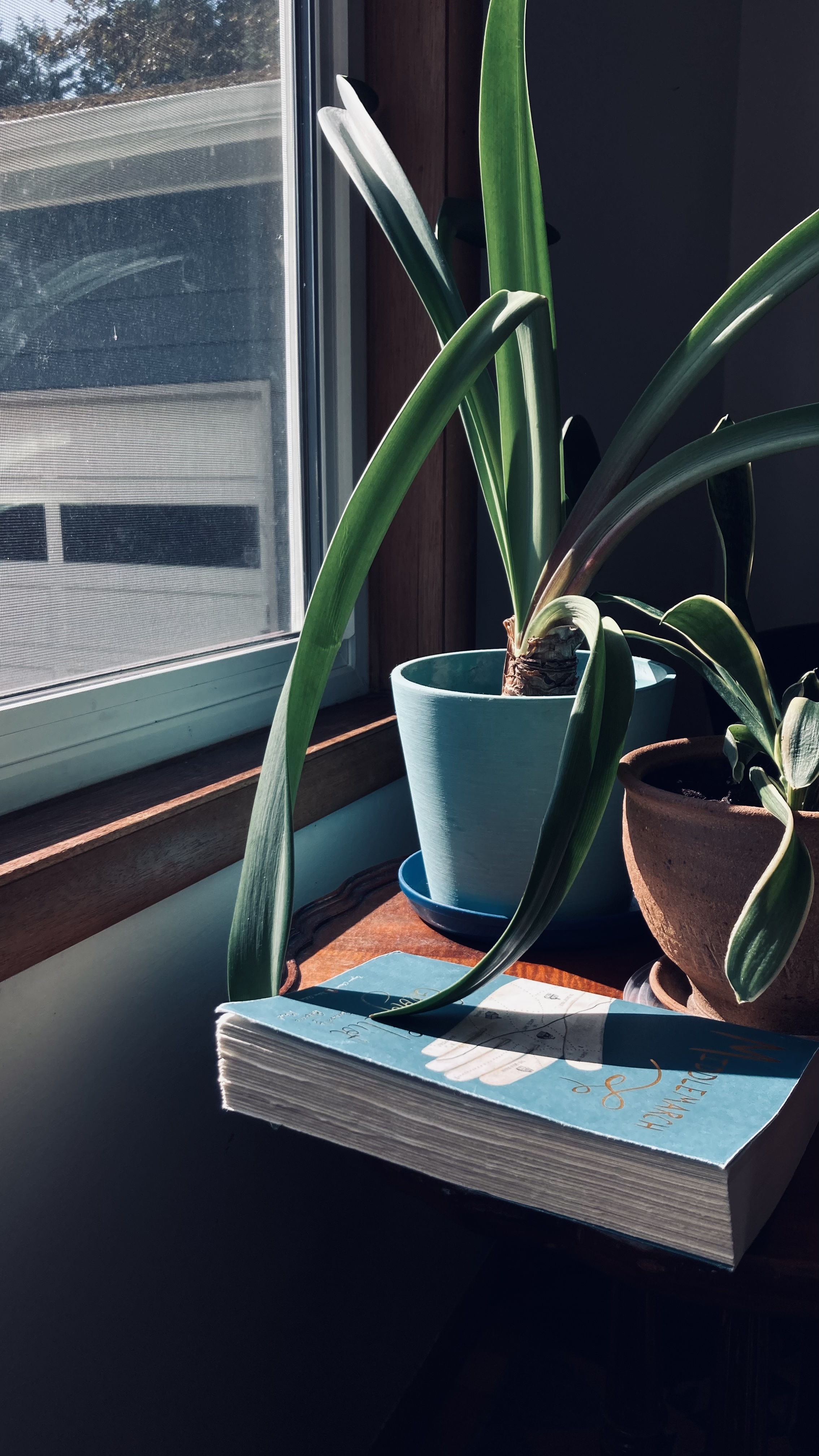
It is a stunning fall day and I’m alone in my house for the first time in 11 years. This is not strictly true but maybe you’ll understand when I say it’s emotionally true. This is the first year all of my children are in school, and I am not. In school. Or taking board exams. Or working outside the home. Instead, I am sitting at a little desk by a big window with George Eliot’s book beside me, feeling the gorgeous sun on my skin and listening to something hum gently somewhere in the house. Maybe it’s the HVAC fan or the freezer in the basement. Whatever it is, it’s a purposeful, quiet sound I never hear because four children in a modestly-sized house are not quiet.

I have not had this kind of quiet in a long time.

I chased quiet for a while. In between things.

Naptime, library storytime, wildfires
Smartphones, diagnoses, road trips
Spray mops, slime kits, Paw Patrol

Big things and little things that wore me down and simultaneously grew my patience, rewrote what I knew about love, and built a new foundation under my faith. A few years ago, I stopped chasing quiet in order to write, and started collecting quiet in my heart, for no reason, to make nothing and please no one. Because I needed the quiet for myself, and because I needed to know what I needed writing for, before I tried it again.

Maybe I also went quiet because of wounding. Writing honestly online brought rejection from a few former friends. Substack became another social media universe of noise and overwhelm. I was tired– I am tired– of the Internet, the age of AI, and trying to figure out where I go with a gift that originally had nothing to do with these things.

That’s a long preamble to a simple, Hi. I’m here.
I’ve been reading Middlemarch with my friend Callie since summer solstice, a midpoint of sorts in the calendar year. It seemed like a good day to launch our boats into this hefty English novel, because it turns to some degree around the questions and realizations of midlife. Scaffolding around the term “midlife” is rickety at best, but something about sending my last baby off to school, and being alone in my house like this, and a number of other recent transitions, makes me want to think out loud about where I find myself.

If mid means a perfect halving, then I hope I’m not there yet; I’d love to live to 86 and beyond. But if mid is more of a zone, the way new landscapes make themselves known by a few different flowers here and there, before the trees and horizon change, then I think I’ve reached terrain where one sort of life is behind me, and a new one is here.

Middlemarch is this kind of terrain: in the English countryside, somewhere between a city and a country town. It’s a middle sort of place, where people are reconciling the life they are living now with the one they’ve lived before, and the dreams they may have had. How do those expectations square up with today? If they’re disappointed or horrified with where they find themselves– and many are– was it that they made the wrong choices, or were the expectations faulty, hastily taken up without fully considering whether they were the right set of expectations to begin with?

In Middlemarch, we meet the young, vibrant Dorothea Brooke, stubbornly insisting on a doomed marriage to the aging, emotionally-dead Casaubon. Both enter into marriage with entirely different goals and expectations, and both are disappointed and ultimately feel trapped and isolated in an unhappy bond. Dorothea is an intensely-feeling idealist whose deepest desire is to somehow contribute to the alleviation of suffering in her community. Her love of God feels indivisible from a commitment to justice, and she feels misunderstood and thwarted in her goals by her wealthy but much-preoccupied scholar husband. She comes to confide in Casaubon’s much younger (and bitterly resented) cousin, the artistic Will Ladislaw, about her plight.

Dorothea insists to Will that she has no longings. But then goes on to qualify,

“I mean, for myself. Except that I should like not to have so much more than my share without doing anything for others. But I have a belief of my own, and it comforts me.”

“What is that?” said Will, rather jealous of the belief.

“That by desiring what is perfectly good, even when we don’t quite know what it is and cannot do what we would, we are part of the Divine power against evil– widening the skirts of light and making the struggle with darkness narrower.”

If I get nothing else from this novel, I think I will spend the rest of my life grateful to have these sentences in my pockets. Narrowing the struggle with darkness and widening the skirts of light. How perfect an affirmation is that for times like these?

Like Dorothea, this is a longing that has been with me a long time. For me, it makes tangible a spiritual uneasiness that I have come to see as a gift: How do I honor the One who gave me life by doing the most I can with what I’ve been given? How can I tip the balance of justice in an unjust world, even if the shift is imperceptible? Maybe at midlife, much moreso than at Dorothea’s age, the realities of how much of a difference we can make become thrown more starkly into relief.

What can I do? Does it matter? How do I know where I’m needed? What if I fail?

Then, too, at midlife we find ourselves much more hemmed in by specific limitations. At 26, I could sleep on a mattress in a friend’s spare room, or live in an off-the-grid trailer while working part-time on a vegetable farm, riding my bike after work to the garden I kept behind my church, where I grew zucchini and cilantro for the food pantry. I had no money and no kids and nothing but time and health and energy. My vision for the good I could do in the world was small and simple, but I could do it.

These days, I struggle daily with what I would like to do for others and what I have the capacity for while caring for four kids, a family, a home. I go through cycles of overcommitting and burning out. I sign up to serve meals downtown and then have to take my child to urgent care or tend to my own health problems. I try to help weekly in the church food pantry but end up overwhelmed, leaving home where my toddler is melting down, my tween is frustrated with homework, and there are phone calls to make to the school district to get a 504 in place for our neurodivergent son.

Life already feels like too much, yet I still feel I am not doing enough. I am not always sure that I’m doing all God wants for my life by raising my kids, trying to grow emotionally and spiritually so I can be good to those I love, and taking time for rest and for joy. Even in these small things, I am often overwhelmed, my heart slips into the wrong place, and I forget to do it all for love of God.

I recently learned about a Spanish nun who had a series of visions of the Lord in the 1920s and 30s. According to her journals, Jesus said to Servant of God Josefa Menendez: “I love you as you are. I know that your frailty will cause you to fall more than once. I know that you will practically never do what you promise me, but your good will and your humble trust with which you come to me after your fall glorifies me so much that my heart gives to you immense graces.”

This is so comforting to me, as it always is when I read accounts of the saints, and see how they grumbled, stumbled, fell, and got up again. Of course they did. They were human just like us. St Therese of Lisieux especially emulates this in her writings on the Little Way.
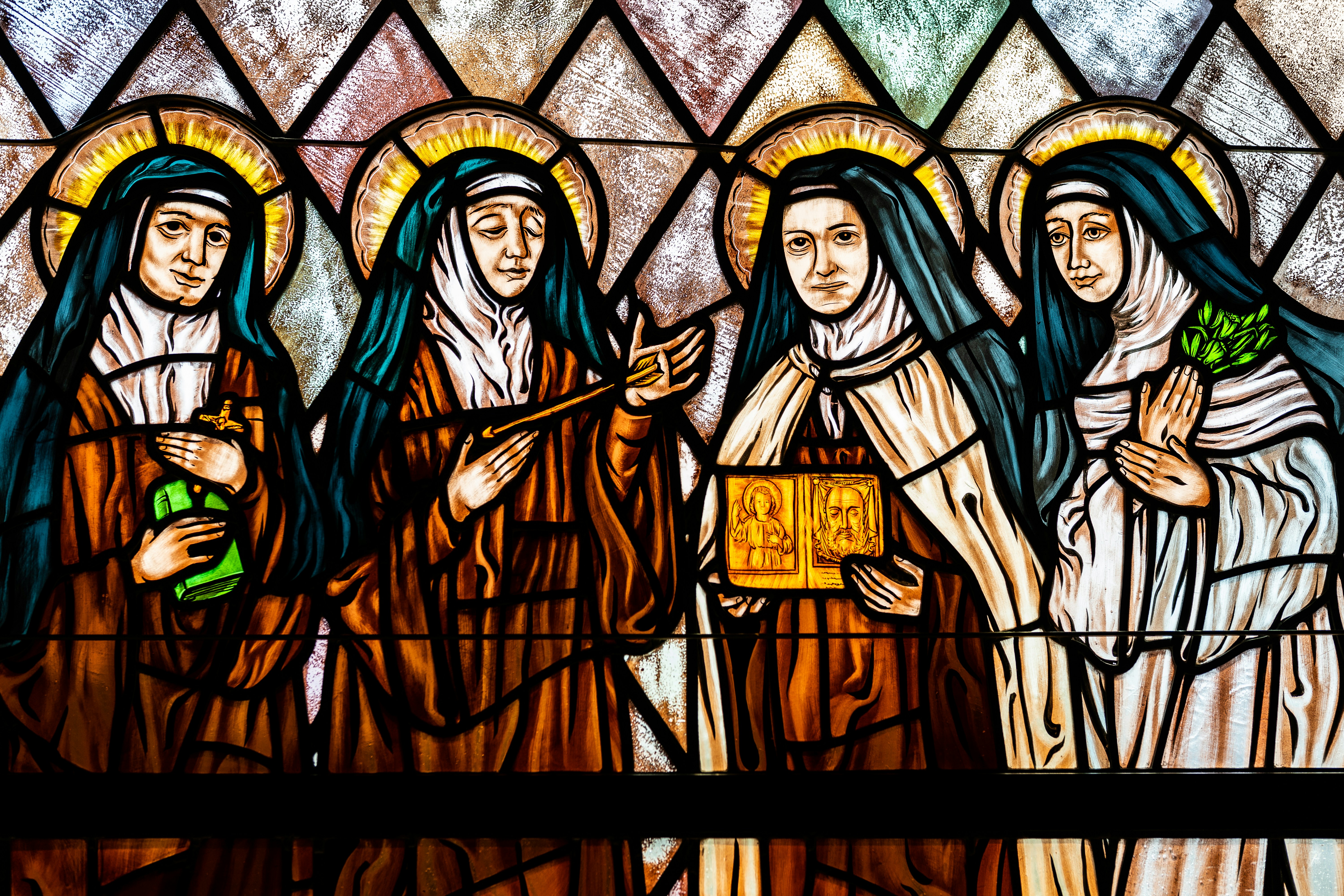
Photo by Nick Castelli on Unsplash

It reminds me very much of the oft-repeated poem of Thomas Merton’s, read in part here by Fr James Martin, one of my favorite people of all time: “Lord…the fact that I think that I am following your will does not mean that I am actually doing so. But I believe that the desire to please you does in fact please you. And I hope I have that desire in all that I am doing.“

I’m an Enneagram Type 1– the perfectionist or optimizer– but I don’t think I’ve been ready to work on that until now; this is, in fact, characteristic of Enneagram work. It’s perhaps a tool specifically for middles, for midlife. As Richard Rohr writes in The Enneagram: A Christian Perspective:

“By our twenties, our personality type is well-established because it works for us in some strange way. But in the middle of our life we may begin to see the other side of the coin, the dark side of our gift. When we are excessively fixated on our supposed gift it becomes a sin. Maintaining this self-image, this false self, becomes more and more exhausting.”

Maybe midlife is when we finally get to work.

Or as Mark Manson writes in The Subtle Art of Not Giving a Fuck:

“This is what is admirable…The people who just laugh and do what they believe in anyway. Because they know it’s right. They know it’s more important than they are, more important than their own feelings and their own pride and their own ego. They say, ‘Fuck it,’ not to everything in life, but rather to everything unimportant in life. They reserve their fucks for what truly matters.”

At this point in my life, if you’ll pardon the language, I am trying to give fewer fucks. Some of that work is being done for me by virtue of an aging body, raising four kids, there being only 24 hours in a day, and a modest increase in the amount of time I have available to do more than the basics.

But the rest of it is taking active participation and intention: being aware of when I am caring too much about something I don’t actually need to care about. This does not come easily for Type 1s on the Enneagram. Type ones are pretty sure we need to give a fuck about everything, all the time.

I think the invitation of midlife, and the invitation of Christ, in part, is to look our limitations squarely in the eye and give thanks for them, while we do our best (and fail) to rightly order our lives around the One who matters most, who is Love, and who loves us unconditionally.
By Heart

Love is a fire truck, red as a heart, I whisper to my one-year-old in her pajamas. Her hands, perfect dimples and seashell nails, fumble with the pages, eager to turn them before I’m through with the story. She mimics the siren’s woo woo woo just like her brother did when he was smaller, shuts the last page emphatically like her sister used to do. We know this book by heart.

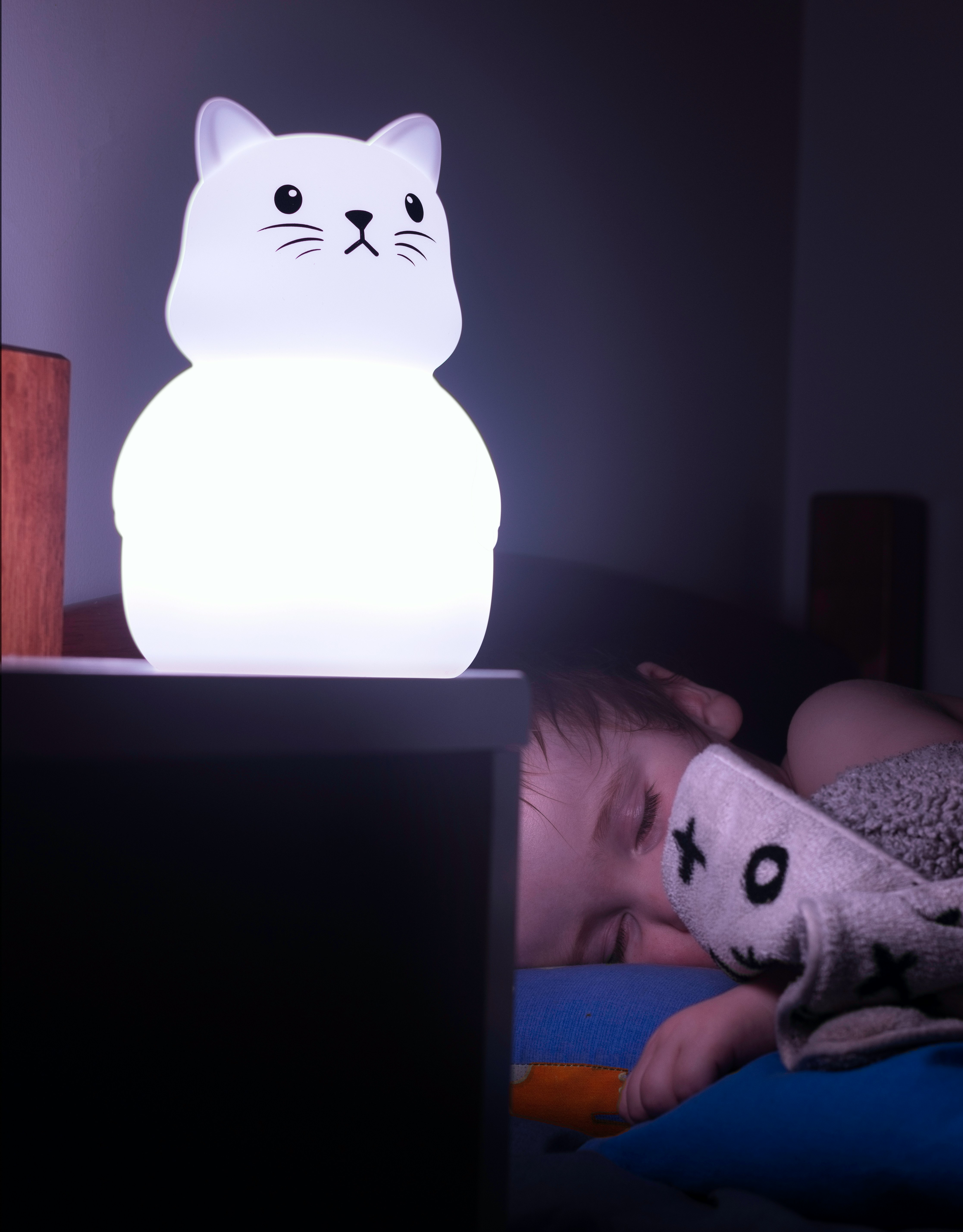
She knows what’s next, too, in the bedtime routine. We turn on ocean sounds from the owl lamp on her dresser, more static than waves after six years of service. We turn off the light, and my baby rests her head on my chest, pops her thumb in her mouth to listen while I sing and rock.

*

What do I know by heart?

Good Night Moon, its lilting rhythm intertwined with the guilt I felt when sleep-training our first-born. Where the Wild Things Are, the vine of its rhyme wrapped around memories of our precocious talker, who would complete the final phrases of each line: His mother called him Wild Thing, and Max said…? “I eee you up!”

Songs from library storytime. The Paw Patrol theme song. Old nursery rhymes: a penny for a spool of thread, a penny for a needle–three objects fast becoming outdated, unknown by my children, though they know Mommy’s going to school to become an acupuncturist, to use what my oldest calls my “soft needles” to help people with pain and sadness and sleeplessness.

Slowly, I’m memorizing the Shu Transport points, and the five systems of the Balance Method, flipping through flashcards kept in my jacket pocket, in line at Winco. Little by little, I work this ancient medicine into my heart. Halfway through acupuncture school, half of me is always studying. On the walk to school, tracing the edges of little hands to find Large Intestine 5 in the dip beneath the thumb bone, Heart 9 at the top of a tiny pinky finger.

*

There are some things we can only know by heart. There’s no other way to account for it.

It’s just before sunset and I’m at Fossil Beach with this guy I know. We are 20 and 21 years old and we’ve spent the fall hanging out in each other’s tiny kitchens between classes, cooking each other oatmeal, or sharing jam jars of wine and talking late about Robinson Jeffers and planets and our families. Then today, he asked me to spend the afternoon at the beach, and we packed a paper bag picnic and I climbed, heart pounding, into the passenger seat of his red truck. I was sure he could hear my heart then, and I’m sure he can hear it now, sitting side by side on this driftwood log, staring at a peach sky.

When he asks if he can kiss me, I know — I know. My heart is in my mouth and I’m so sure of the rightness of us, it scares me. Years later, I’ll still struggle to describe what I feel in this moment, how my heart seemed to know who this was. I’ll wonder if I’ve overlaid the moment with every moment since then– 18 years of loving him.

*

Maybe it’s both. A flash of recognition, the heart understanding something you can’t speak aloud. And also speaking words aloud, until they sink deep into your heart. You learn something by heart, by accident or on purpose, through repetition. Until it becomes dull and meaningless (a comb and a brush and a bowl full of mush), or until it shines with the gleam of purposeful reuse.

Like the sturdiness of recited prayer: old words gripped tight as a banister, steadying feet for the climb. I started with the Lord’s Prayer as a child, copied it onto paper in Sunday school, then clung to it through childhood nights when I braved the dark alone, whispering the words over and over to myself.

Decades later, I am praying one decade of Hail Marys at a time, learning the Anglican rosary. Running my fingers over plastic beads, I find small spaces of peace between naptimes. I speak the words aloud and feel connected to the millions of people who have said them before me, are saying them now. It becomes both my prayer, and not mine. My words, and not mine. I am a mother with very human worries in my heart, and I am somehow connected to the Holy Mother in the space created by these prayers. The worries still and settle like the beads, sliding into place.

“For it is with your heart that you believe and are justified, and it is with your mouth that you profess your faith and are saved,” Paul wrote to the first believers two thousand years ago (Romans 10:10).

Belief and knowing happen deep within us, where there are no words. But belief can be sparked by words, by testimony and prayers, poetry and letters. And when we believe– when we fall in love with God– we have to speak it. Like the circle of beads, belief and words are interconnected. A mystery.

Even Paul, encouraging those early believers from a distance, was sending them older words they would have recognized, from the Torah: “The word is near you; it is in your mouth and in your heart, so you may obey it.” (Deut 30:14)

I want the word of God near me like this. In fact, I’m realizing anew how much I need the word of God every day, all day long. Otherwise, I forget. I fall asleep, again and again, just like the disciples. I say I want to hear God’s voice and know God’s purpose for me, but really I have been refusing the simple (not easy) truth that God’s purpose for me is the same as for everyone who tries to follow Jesus: to point others to God, to be used by God.

To hear God’s voice, I need to bring not just prayer but the bible into the rhythm of my days, in whatever way I can manage it. Reading a Psalm and a chapter of a book from the New Testament before I clear the lunch dishes. Listening to a hymn in the car on my way to preschool pickup. Tucking a verse into my stack of flashcards. I want to have more of God’s word in my heart so I can better hear what God has to say to me each day. So I can have the word in my mouth and in my heart.

*

Rocking my baby in the dark, I’m doing what I do every time I put her down for a nap or for the night: focusing every part of my attention on her, taking all of it in, as if I’m studying for a test. I’m learning her by heart, because each day feels like a train that carries us further from babyhood, closer to the future.

Outside the door, I hear my husband ask our son for the nineteenth time if he’s sure he’s done with dinner. Doesn’t he want some of the yummy green beans? We both know all he’s had to eat is the bun around the hot dog, a swipe of ketchup. And still there’s patience in my husband’s voice. Kindness, and weariness too.

After this comes the long trudge across the desert toward the oasis of bedtime– all three kids asleep, and maybe some time for talking again, just the two of us. These days it’s mugs of tea and not wine, but there’s still talk about poetry and planets and our family.

But first there’s teeth-brushing, pajama-wrangling, small-naked-person-chasing down the hallway. No, I don’t know where your bear slippers are. Yes, I will fill up your water-bottle. It’s time for a story. It’s time for lights out. Okay, go to the bathroom then come right back. Yes, I will sing you a song. No, you just went to the bathroom. Good night. It’s time for bed. It’s time for bed.

Most nights, I am so desperate for them to be in bed, I try to speed things up. But some nights, I remember to weave prayer into their bedtime routine. I want them to have this habit. There’s one we’ve been trying out lately that they like, from a little book, Praying with My Fingers. Each finger represents a different group of people to pray for: friends and family, teachers, leaders, the sick, and yourself. I count with my fingers, and learn how to pray.

In a way, children already know how to pray, I think. They have their ears resting on God’s chest, listening to the heartbeat there, like my baby does. I think this is what Jesus means by having a childlike faith. Children know they are small and need help. They know they are loved, and that someone knows what they need, and cares about their hurts and their worries. I am teaching my kids, in my imperfect way, about God, hoping they’ll love Jesus. But they’re also teaching me, about trusting God and resting in his unconditional love.

I think of the routine my son and I stumbled into, through the creativity of desperation, at his first preschool drop-off last year. Let’s tie strings to our hearts! I whispered, getting down to look into tear-filled eyes over his mask. He whimpered, but watched as I pantomimed unspooling a long thread, whipping it in the air like a lasso. He giggled as I coiled it around my heart, then very carefully tied the other end around his. Remember if you miss me today, you can pull on your heart-string, and I’ll feel it. Sometimes now, he runs into his classroom without looking back. And sometimes he gets out his invisible string, and he lassos my heart.


Joy in Four Parts

1

The baby is both things incarnate: the embodiment of joy, and unexpected. Even now, almost a year later, I still look at her in astonishment. Is she really ours? I take a beat before I recognize our reflection as a family of five. Who is that family with three children, outnumbered? Spilling noisily out of a grocery aisle, or strolling loose and easy to the park like, it’s no big deal, what’s one more? She is our big deal. She is our more, and her whole face shows it. She opens her mouth as she takes her first wobbly steps, holding my hands. Ha! Ha! she shouts, looking at me, eyes wide. Did you know this, mama? Did you know the world contained this miracle, this walking? I have doubts about my own purposes here, but I know our baby’s. She came here to be joy.

2

He is so small, so heavy with tears each day, and so much lighter– like a bird– than his constant motion makes him seem. Every day I wonder: Who are you? Who will you be? Our birthdays are five days apart, with 35 years between us, and when he was born I thought, Here is a child who will be like me. We will understand each other, like January people do. In some things, that’s true. Today, working on the solar system puzzle together, slowly, on the kitchen table. Making a nest of blankets on the couch for us to read books in. How he never wants to NOT be wearing pajamas. But then, the abandon with which he sends his trucks into the block towers, whooping at their destruction. The shock of his delight. The shock that it doesn’t take sameness, that I don’t need to share his tastes to share the blaze of his happiness.

3

My first light, my bright girl, she laughs loud. She’s so silly, so ever in the mood for a game it’s easy to miss how soft she is, how easily, deeply wounded. Her quick hug around my waist at the stove where I’m cooking, seeing me frustrated with her brother, stepping around the baby. The many all-caps drawings in pen she makes for us. LOVE SKY FOR MAMA DADA ILOVEYOU SO MUTH. I had bought all the books, last year, to teach her to read. I was going to follow all the steps and now it’s like she’s taken flight. I’m watching her learn it on her own, among her friends at school, trying out different spellings at the kitchen table, or picking up on letters in the wild when we’re out driving, her whole face lighting up in the rearview.

4

The grass in the meadow had curved low on the ground in a pattern like clouds, and the kids were running in it, in the breathless, expectant way of children. They don’t know what comes next or where they’re going, they just know they have to be there, be in it. We called them back from the edge where the grass darkened into bog, picked them up to take a picture with us, in the spot where we were married ten years before. I remembered looking at the stand of pines in the near distance, thinking to myself– Could there ever be joy as deep as this? With him, with us, together, could life ever really be that hard? Yes, I thought, holding our children close in the meadow. And yes.

Libraries Foster Connection and Community Resilience: Speaking to Support Portland’s Library Bond

Today the Multnomah County Board of Commissioners voted unanimously to refer a library expansion bond measure to the November 2020 ballot. Along with thirteen other Portland residents, I had the pleasure of participating in a period of public comment before the referral was put to a vote. This is the three-minute statement I spent weeks writing and whittling down.

I wasn’t the only speaker who got a little choked up sharing my story of love for our library system with the very sympathetic board, all of whom seemed ready to vote “aye” even before hearing public comments. The board room was packed with people of all stripes, passionate about supporting and improving the library. One speaker’s family has had five generations use and enjoy the Belmont branch.

Our library system is one of the most-used in the nation, but ranks 102nd in square footage. Officially made a tax-supported public library in 1902, most branches were built in the early 20th century, designed to accommodate an early 20th century population we have since overwhelmingly outpaced. My family has been regularly  turned away from packed event rooms at storytime due to overcrowding, and after one of several such experiences I reached out to the Library Foundation to ask how I might get involved in efforts to fund expansion. They responded with kindness and generosity, and invited me to participate in supporting this bond measure by sharing our story.

What a thrill to participate in this local part of the democratic process. I’ve been hungry for hope and for ways to directly impact decision-making locally, and this morning fed my soul. I can’t wait to vote yes in November.


Chair Kafoury and Commissioners, I am grateful for this chance to speak to you today and ask you to put this bond before voters in November.

I’m a homeowner and the mother of two young children, ages 5 and 2. We live in Lents, one of many neighborhoods in East County experiencing rapid change, not all of it beneficial to the people who live there.

My daughter and I started going to storytime in 2015, when she was 4 months old. Once or twice a week, we walked to the Holgate Library and joined the circle of kids and parents from our neighborhood for stories and songs. Her face lit up whenever we said the word “library.” By preschool, her vocabulary wowed her teachers.

I truly believe we owe her pre-literacy skills to storytime at the library. This free program shaped her because it was easily available to us every week.

Like a good story is more than its plot, and a love of reading is about more than learning letters, storytimes are about more than songs and books. They are about consistency and connection. One of the first names my daughter learned was Juliet, the Holgate children’s librarian who knew her, in turn, by name. These early relationships and exposures matter.

But this magic formula is becoming harder to access at Portland libraries. Since my son was born in 2018, I’ve seen my family and others regularly turned away from storytime due to overcrowding.

One recent morning, after the usual chaos of spilled Cheerios and preschool drop-off, it felt like a minor miracle when my son and I made it to the event room at Holgate— only to find the door closed and a sign saying FULL. As I comforted my son, I was embarrassed to find tears in my own eyes.

But as we walked home that day, I realized I could make this about our small disappointment, or I could see the bigger picture. Over the past few years, I have felt the city changing. Like so many of my neighbors in Lents, I worry for the folks struggling to survive winter in tents and cars. Our city is stretched to capacity, and everywhere we look, we see need.

At the library, though, I see solutions. I see resources made available to people of every age, economic background, race, gender, and ability. I see those resources being heavily, gratefully used.

What if, on that recent day, I had been a first-time library user? A family new to town, curious about storytime? Would I have come back?

I want storytime for EVERYONE. And that’s just one of many library services that Portlanders want and use. The library consistently brings me and my neighbors connection and empowerment. As neighborhoods grow, our library branches need to grow, too.

Give the community a chance to invest in East County libraries like the one my neighbors and I use. Give us a chance to invest in each other.

When You See the Heartbeat at Coffee + Crumbs 

1496066704917

In early June, my essay about waiting to miscarry appeared on Coffee + Crumbs.

“When You See The Heartbeat” is a short essay describing the two weeks between an unpromising first ultrasound just before Christmas, when the heartbeat was detectable but weak, and a second scan after the new year. Writing this essay helped me process the swirl of hope and fear I felt as I waited.

In January, we lost our hoped-for baby at 9.5 weeks, in the middle of one of the coldest, wettest, iciest winters in a city wholly unprepared for snow. It was a long and difficult winter. Spring’s arrival never filled me with as much hope and relief as this year.

On June 2nd, when this essay went up on the site, I had my first ultrasound for the baby I’m now carrying. This time, baby measured right on track with a strong heartbeat. I sobbed through that ultrasound, thinking of the baby we lost and this new little one we are so hopeful for. We are praising God that we’re at 14 weeks now, and praying this baby will be born healthy and full of life in early January of 2018.

I share this essay for anyone who is waiting, anyone who is grieving the loss of even the tiniest life. I share it in hope and with an outstretched hand if you are feeling alone in the middle of your own dark winter– even in high summer.

Photo via Coffee + Crumbs.

On Creativity, Marriage, and Parenting on Coffee + Crumbs


C+Cphoto

I’m delighted to share my essay “Through,” published this month on Coffee + Crumbs. This essay is about how becoming a parent transformed my relationships– to my husband and to my creative work.

Coffee + Crumbs has been a lifeline in these early years of parenting. I’ve looked forward to each new essay appearing on this collaborative blog about motherhood, because I can always count on the words published there to be affirming, encouraging, and real. I appreciate how this collective group of writers and editors does not shy away from the hard parts of becoming a mother– and how the readers respond with kindness and support.

And as I’ve folded laundry, washed dishes, prepped dinner, or collapsed on the couch after my little one’s bedtime, I’ve LOVED listening to the C + C podcast, with its humor and helpful advice on everything from adoption and being a working mom to making time for spiritual practice and finding the perfect postpartum bra. (PS, there’s also an awesome monthly newsletter you should subscribe to right now. It’s probably the only newsletter I subscribe to that I read, reread, and save. Click here and look for the subscribe button on the right.)

One of my favorite things about growing as a writer has been finding publications that really fit my voice– and becoming part of the community of readers. It seems so obvious: you should publish where you read. And yet actually doing that has made such a difference in my life. It has connected me to other readers who resonate with my writing, and to writers whose work I love, too.

Read my essay “Through” on Coffee + Crumbs, leave a comment, and join this amazing community of mothers, readers, and writers.

Photo via Coffee + Crumbs

Poem Response on Vox Poetica

Here’s a poem I wrote in response to a photo prompt on Vox Poetica, a photo called Alberta Bound by photographer Michael Lee Johnson.

Mind

Stopped by the gate, you pace the place old
wheels have smoothed, tracks so worn

that’s all you see, never mind the fact
they cross over, go on. You believe

in the gate, though your lips shape
other words. Your hands trace the rubbed

wood, paint peeled—listen, you may as well
leave it here. There’s a way out that’s everywhere—

see how the sky goes around and through? Despite
the signs, forgiveness is the usual procedure: an inch

per century pushing up through plates.
The pace isn’t what’s important here. Out

in the estuary the same light grows, seeds
ripen and shake: little fists opening.

I love the tagline for Vox Poetica: “It’s just poetry. It won’t bite.”

I wrote this poem as part of a 30 day poetry challenge I’ve undertaken this August with a friend and fellow poet, and it’s helping me reaffirm that creativity is there in abundance. I don’t have to ration it or fear there won’t be enough. There is plenty there, and plenty of places and people to share it with.

Try writing a poem to a photo prompt from Vox Poetica, Rattle, or the 20 day poem challenge coming up at Ekphrastic Review.

Writing About Climate Change

Here’s a letter I wrote for Dear Earth With Love, a collaborative community chronicle of personal stories about climate change.

My dear friend Jo created this project. I encourage you to write your own letter to the earth, responding to your personal experience with climate change. It could be a letter, poem, story, song, or spoken word piece. It could be a video of a dance or performance; a painting, collage, or sculpture. Whatever medium suits you best, use it and make something– then submit your work.

Dear Earth With Love holds rolling submissions, with a deadline posted every few months.  The next deadline is August 31, 2016.

Read the beginning of my essay here:

Continue reading “Writing About Climate Change” →