Loaves and Fishes and Mothers

This post has sat in my drafts folder for over a year.

A year ago, I had a newborn and a three-year-old and a five-year-old, and no childcare. A year ago, we were a year deep into the pandemic and I was way past the point of an empty tank. In this metaphor, if the car is me, I had long since broken down on the side of the road. I wasn’t even trying to get somewhere anymore.

Most mornings, not every morning, I turned on Daniel Tiger for my kids and opened up Zoom to join a handful of people from my church in morning prayer. I found a brief respite and comfort in praying for the needs of others, and asking for intercession for my own needs: some variation on the theme of more patience, more sleep, more courage, more love.

I found relief– and hope– in the closing prayer: Glory to God whose power, working in us, can do infinitely more than we can ask or imagine.

I wanted so much for God to do infinitely more in me.

On every front, in every direction I looked, I was failing. I wanted to be in the streets, protesting, or helping feed and house neighbors in my city, but I couldn’t even manage to create peace or assuage hunger in my own home. Not significant enough. Sleep-deprived and exhausted, I cried in front of my kids just about every day. Not strong enough. I’d manage to choke back my frustration and respond calmly to one or two sibling squabbles, only to lose it after the third or fourth, making little eyes well and chins quiver in spite of my most desperate efforts. Not patient enough.

Locking myself in the bathroom so I could take a few deep breaths, while the baby wailed from the next room, I’d succumb to self-berating thoughts: Not selfless enough. All day, I looked forward to Lyle’s return from work, only to hear harsh and accusing words come out of my mouth the minute he walked through the door. Not loving enough.

Where is God in all of this? I wondered. What does it mean to have God’s power working in me? When does that kick in?

Any time I could get a break for 20 minutes, I started listening to podcasts on the Way of Love from the Episcopal church website. I’d sit in the big recliner downstairs with my earbuds in and close my eyes. One day I heard Bishop Mariann Budde give a reflection on the General Thanksgiving, another of my favorite parts of the morning prayer liturgy. As part of her encouragement to develop a daily habit of reading a small amount of scripture every day, she gave an example of a time when her daily practice of reading the bible really showed her that this is how God wants to speak to us.

Thirty years ago, when she was an associate priest and a new parent–with all the sleep deprivation and constraints on her time and energy that that entails– she had the opportunity to serve on the board of a local food pantry. She wanted more than anything to be able to volunteer more of her time, to visit the food pantry and be part of its day-to-day operations, but in the end, all she was able to do during her one-year term was to show up at the monthly meetings. She drove to the last meeting with a speech of apology prepared, feeling badly for not having been able to do more, and was left speechless when the board chairwoman gave a speech of her own, praising Mariann effusively for all that she had brought to them during her time. Mariann reflected that the chairwoman’s words “didn’t change my internal assessment of my contribution, but I also didn’t get the sense she was lying.”

The next day during her regular time of prayer and reading, she opened her bible to the story of Jesus and the miracle of the loaves and fishes. The disciples are anxious at the prospect of feeding a crowd of thousands, and they go to Jesus with their worry. They ask Jesus to feed the thousands, and instead Jesus says, “You give them something to eat.” We couldn’t possibly, the disciples reply. We don’t have enough. Jesus asks them, “What do you have?” And with their meager offering of a few fish and a small amount of bread, Jesus calls down blessings on the food, turning it over to God and then asking them to distribute it. You know the rest of the story. How there was more than enough the feed the thousands, and baskets of food remaining.

In her armchair 30 years ago, Bishop Budde reflects, she realized she had experienced that miracle in her own life. By God’s grace, what the people on her board experienced from her– what felt like an meager offering– was more than enough. “What Jesus needed from me was to making my offering, however insufficient it seemed to me,” she says. “Every day, in fact, I am still faced with needs I cannot meet and tasks I cannot manage. I don’t understand how the miracle of abundance works, I’ve only experienced that it does.”

This reflection brought me so much peace and reassurance, during a time of complete overwhelm and disappointment in myself. I’d never before thought about the disciples’ participation in the miracle, how Jesus repeatedly invites his followers into the experience of God’s love and abundance. You give them something to eat. Offer what you have, and turn to me, trusting me with the rest.

That Bishop Budde’s experience of abundance happened right in the midst of motherhood made the message all the more immediate to me. In her beautiful essay “Multiply Me,” Samantha Stephenson writes of the freedom that comes from admitting our own insufficiency, as mothers. “Everyone is crying,” she writes. “It’s need after need, and when do I rest?”

Like Mariann and Samantha, I, too, feel overwhelmed by the needs all around me, and frustrated by my inability to meet them. The miracle and mystery of the loaves and fishes is all about God’s sufficiency, Christ’s mercy– and yet it’s about the disciples’ faith, too. It’s about the heart-change involved in turning over more of your life to God. If I want to experience God’s grace and abundance in my life, I need to keep turning to him, in prayer and in reading and in mothering, too.

“Lord, multiply me, I pray,” Samantha writes. “I pray wondering when grace will kick in, until I realize it isn’t coming. It’s already here.”

It’s the not-enoughness that is the gift, she writes. It’s in our insufficiency that we are able to experience God’s grace, in the stretching of our bodies and hearts, in our turning and returning to God in word and prayer.

This essay has sat in my drafts folder for a year. It’s a year later, and I am sitting in a coffee shop in eastern Washington, the first plane flight and first trip I’ve made since March 2020. I’ve just spent a nourishing, cup-filling 48 hours in the company of three other mother-writers, people from different corners of the West whose writing I’ve admired from afar for some time. It’s a rare privilege for each of us to do this, to make the drive or book the flight or arrange childcare. None of us takes it for granted, and most of us won’t have an opportunity like this again for a while. We’ve met here to write, and we’re writing now, but we’ve also met here to talk, to swap stories and ideas and share the frustration that mother-writers know so well: not enough time for writing, not enough of a “platform” to meet the publishing world’s standards. How can it possibly be enough, the weekly two-hour window of babysitting time, the irregularly-shaped margins of the baby’s naptimes, the newsletter or the blog post? Are we doing it right? Should we be doing more?

None of us have come away with answers to those questions, but I think (I hope) we’re each returning home with encouragement to keep going. To keep offering what we’ve been given, what we have, as mothers and as writers, and trusting God to multiply it. To somehow turn our not-enough into more-than-enough. In a way, the conversations we’ve had are the more-than-enough, an experience of God’s provision through friendship and love.

In a few hours, I will get back on the plane and return to my family, to Lyle who’s been solo with all three kids while I’ve been gone. The next few weeks are so full, I’ve printed and reprinted a calendar grid several times to keep track of all the obligations I’ve promised to fulfill: Zoom meetings and errands, dance classes and swim lessons, doctor appointments and clinic shifts. Somewhere in there, I plan to study for the acupuncture school module next weekend, and maybe I’ll find a few scraps of time to read and to write.

I’ll offer what I have, and I’ll fall far short of my own and others’ expectations. I won’t be able to meet the needs all around me in the way I want to. But I’ll make time each day to read just a little bit from the bible, because I know that is where God will continue to speak to me, and give me an experience of his abundance.

The General Thanksgiving

Almighty God, Father of all mercies, we your unworthy servants give you humble thanks for all your goodness and loving-kindness to us and to all whom you have made. We bless you for our creation, preservation, and all the blessings of this life; but above all for your immeasurable love in the redemption of the world by our Lord Jesus Christ; for the means of grace, and for the hope of glory. And, we pray, give us such an awareness of your mercies, that with truly thankful hearts we may show forth your praise, not only with our lips, but in our lives, by giving up ourselves to your service, and by walking before you in holiness and righteousness all our days; through Jesus Christ our Lord, to whom, with you and the Holy Spirit, be honor and glory throughout all ages. Amen.
Libraries Foster Connection and Community Resilience: Speaking to Support Portland’s Library Bond

Today the Multnomah County Board of Commissioners voted unanimously to refer a library expansion bond measure to the November 2020 ballot. Along with thirteen other Portland residents, I had the pleasure of participating in a period of public comment before the referral was put to a vote. This is the three-minute statement I spent weeks writing and whittling down.

I wasn’t the only speaker who got a little choked up sharing my story of love for our library system with the very sympathetic board, all of whom seemed ready to vote “aye” even before hearing public comments. The board room was packed with people of all stripes, passionate about supporting and improving the library. One speaker’s family has had five generations use and enjoy the Belmont branch.

Our library system is one of the most-used in the nation, but ranks 102nd in square footage. Officially made a tax-supported public library in 1902, most branches were built in the early 20th century, designed to accommodate an early 20th century population we have since overwhelmingly outpaced. My family has been regularly  turned away from packed event rooms at storytime due to overcrowding, and after one of several such experiences I reached out to the Library Foundation to ask how I might get involved in efforts to fund expansion. They responded with kindness and generosity, and invited me to participate in supporting this bond measure by sharing our story.

What a thrill to participate in this local part of the democratic process. I’ve been hungry for hope and for ways to directly impact decision-making locally, and this morning fed my soul. I can’t wait to vote yes in November.


Chair Kafoury and Commissioners, I am grateful for this chance to speak to you today and ask you to put this bond before voters in November.

I’m a homeowner and the mother of two young children, ages 5 and 2. We live in Lents, one of many neighborhoods in East County experiencing rapid change, not all of it beneficial to the people who live there.

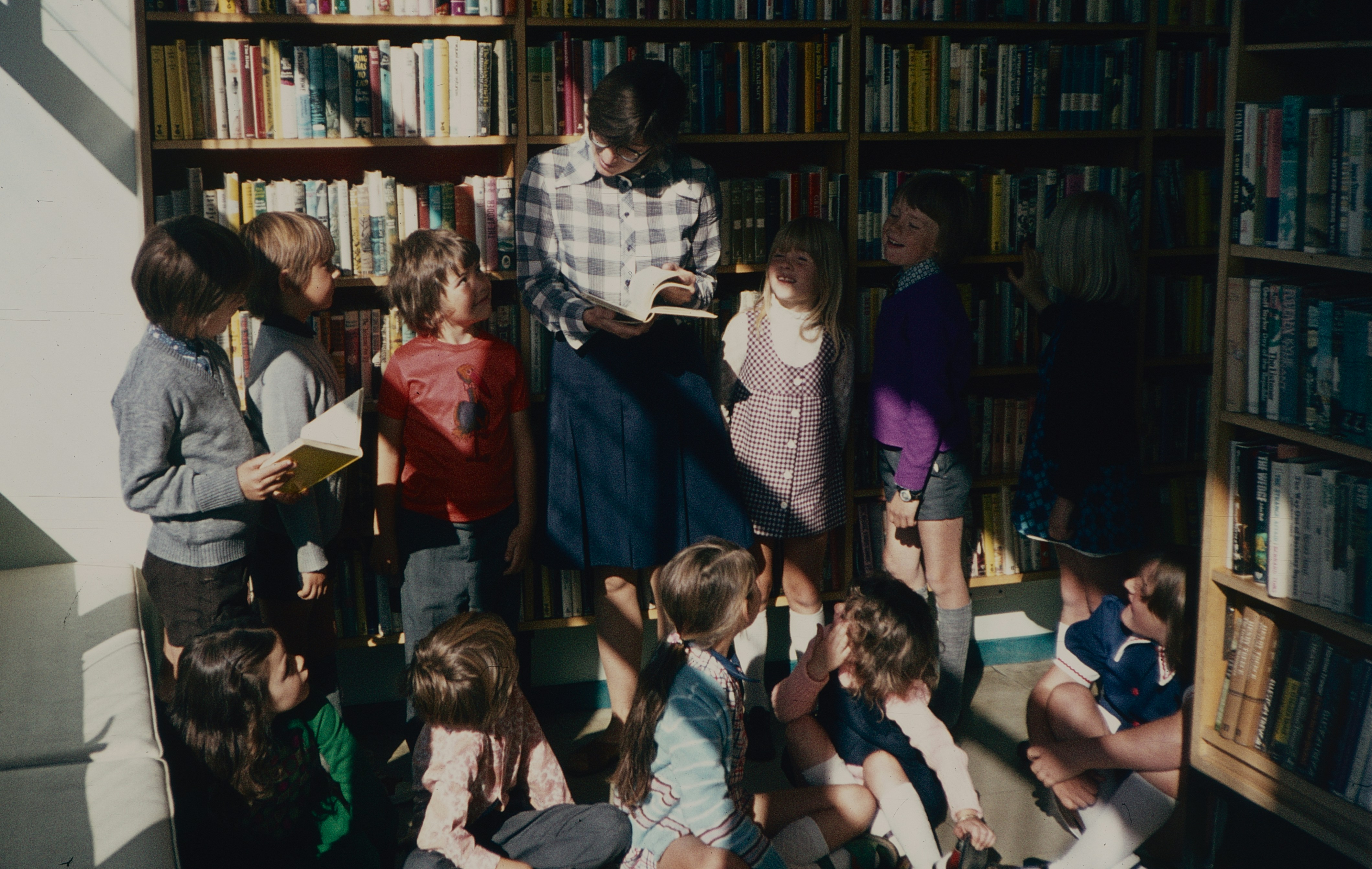
My daughter and I started going to storytime in 2015, when she was 4 months old. Once or twice a week, we walked to the Holgate Library and joined the circle of kids and parents from our neighborhood for stories and songs. Her face lit up whenever we said the word “library.” By preschool, her vocabulary wowed her teachers.

I truly believe we owe her pre-literacy skills to storytime at the library. This free program shaped her because it was easily available to us every week.

Like a good story is more than its plot, and a love of reading is about more than learning letters, storytimes are about more than songs and books. They are about consistency and connection. One of the first names my daughter learned was Juliet, the Holgate children’s librarian who knew her, in turn, by name. These early relationships and exposures matter.

But this magic formula is becoming harder to access at Portland libraries. Since my son was born in 2018, I’ve seen my family and others regularly turned away from storytime due to overcrowding.

One recent morning, after the usual chaos of spilled Cheerios and preschool drop-off, it felt like a minor miracle when my son and I made it to the event room at Holgate— only to find the door closed and a sign saying FULL. As I comforted my son, I was embarrassed to find tears in my own eyes.

But as we walked home that day, I realized I could make this about our small disappointment, or I could see the bigger picture. Over the past few years, I have felt the city changing. Like so many of my neighbors in Lents, I worry for the folks struggling to survive winter in tents and cars. Our city is stretched to capacity, and everywhere we look, we see need.

At the library, though, I see solutions. I see resources made available to people of every age, economic background, race, gender, and ability. I see those resources being heavily, gratefully used.

What if, on that recent day, I had been a first-time library user? A family new to town, curious about storytime? Would I have come back?

I want storytime for EVERYONE. And that’s just one of many library services that Portlanders want and use. The library consistently brings me and my neighbors connection and empowerment. As neighborhoods grow, our library branches need to grow, too.

Give the community a chance to invest in East County libraries like the one my neighbors and I use. Give us a chance to invest in each other.

Health and Other Worthwhile Things: On The Ecology of Care by Didi Pershouse

img494

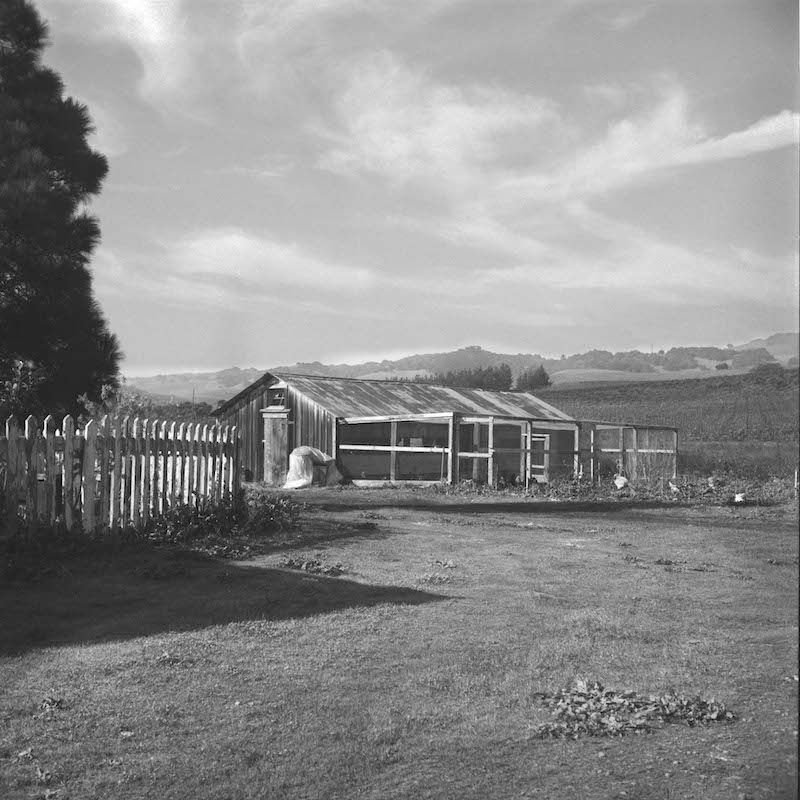
Photo of Green String Farm byLyle Poulin

A few years after finishing my undergraduate degree in creative writing, I apprenticed and worked on small farms, inspired in part by the writing of Wendell Berry. In an interview in one of my favorite magazines at the time, The Sun, Berry had spoken persuasively about the importance of being rooted in community, caring deeply for the land, and cultivating local economies, in an effort to rebuild sustainability for ourselves and our troubled environment. He also gently suggested that the interviewer not get too hung up on the identity of writer, because “there are lots of other worthwhile things you can do.”

This sentence was jarring. It allowed me to admit my frustration in viewing my creative work as my single purpose, and translating that into my sole means of financial support. I felt I wasn’t meant to do just one thing, and yet much of my training and the gist of the popular idea of a “serious” writer pushed me to do just that.

Beyond restlessness and money fears, I also felt hungry for work that would feed me and my neighbors, while addressing some of the dysfunction of modern life that nagged at my consciousness. As I apprenticed at Green String Farm, then worked for non-profit Petaluma Bounty Farm, I got firsthand lessons in growing food using natural process farming.

One of the main tenets of this approach is that to grow truly nutritious food, you need to feed the soil first— and to understand it as a community of microbes, fungi, organic material, and more. Soil health depends on diversity and balance. What a perfect metaphor for my own health! I, too, needed to do a range of “worthwhile things” in order to find balance. In tending the soil, I was tending not just the plants that grew in it, but also my body and spirit. In experiencing the satisfaction of nourishing myself and others, I got a taste of the fulfillment I was looking for.

EoC

Book cover image courtesy of Didi Pershouse

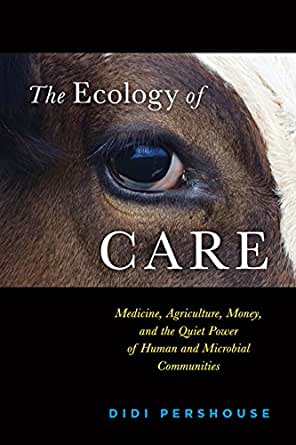
This deeper understanding of the foundations of health is at the heart of a surprising new book: The Ecology of Care: Medicine, Agriculture, Money, and the Quiet Power of Human and Microbial Communities, by Didi Pershouse (Mycelium Books, 2016). Part memoir and part fact-driven analysis of modern farming and medicine, The Ecology of Care describes Pershouse’s gradual shift from her work in private acupuncture, to community acupuncture and advocacy for soil restoration. It’s a beautifully-written, hope-filled prescription for an embrace of community at every level— perhaps our best shot of surviving our climate crisis.

Pershouse draws connections between the soil degradation wrought by the industrial food system, and the harm done to our bodies by industrial medicine. Since “we are what we eat,” there’s a lot of overlap. Over the past century, we’ve shifted from small, diverse farms to profit-driven mono-cropping, and our guts reflect that change. Stripping the topsoil of micronutrients and microbes, and lacing food crops with pesticides and herbicides, we’ve experienced a corresponding loss of microbial diversity in our bodies, and an increase in disease processes related to the ingestion of chemicals. Likewise, as our systems of care shifted from village doctors, midwives, and herbalists to for-profit hospitals and privatized insurance, the cost of care has skyrocketed while quality has plummeted.

But there’s hope.

A re-invigoration of community-based healthcare can decrease costs and increase quality of care, while reducing the vast carbon footprint of an over-reliance on hospitals for basic care. An embrace of farming practices dedicated to creating a “soil carbon sponge” can help harness the excess carbon driving climate change, while restoring soil health.

img483

Photo by Lyle Poulin

A born scientist and gifted artist, Pershouse is both methodical in her research and emotionally persuasive in her writing. She brings humor and nuance to her discussion of the complicated history described above. In an era of alarmism, Pershouse’s work is refreshing in its commitment to both honesty and optimism. She moderates her appraisal of each system’s failures by offering tangible alternative frameworks, and allowing for emotional responsiveness. These challenges are significant, and Pershouse’s work is sustained by listening partnerships with friends involved in many different aspects of healing. In adopting such a practice for ourselves, healers of all kinds can avoid burnout. We can listen to one another when each of us inevitably reaches a moment of despair, acknowledging that pain before identifying what is working and what to focus on next.

For me, Pershouse’s work picks up where Berry leaves off. As I enter another surprising twist in my career path, The Ecology of Care helps me see how my seemingly-disparate interests—writing, agriculture, and community health— are in fact needfully interconnected.

“Hope is a discipline,” Pershouse writes toward the end of her book. This worthwhile work of restoring our health must be undertaken together, and everyone is invited.