Acting As If

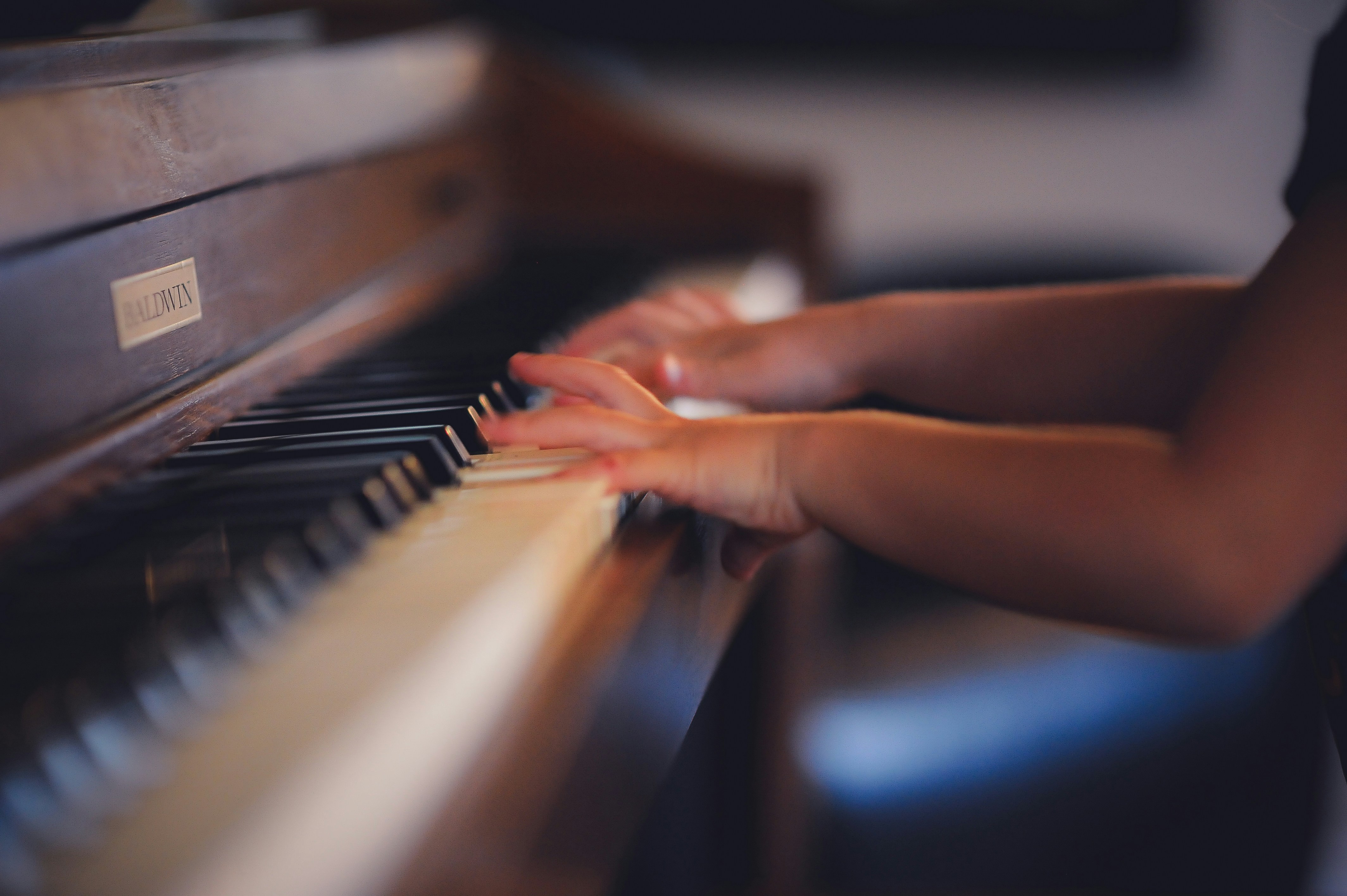
My oldest is taking piano lessons. I sit on the teacher’s couch, petting her small dog Charlie, watching my 7-year-old pick up new concepts like a little vacuum cleaner. She’s too small to reach the pedals. Her feet rest on a blue bathroom stool; she sits on a Peanuts pillow. She forgets which hand is her left and which her right, laughs at herself, tries again. She calls half-notes “the ones with the holes in them,” and her teacher beams with delight.

I try to notice and remember new rules and instructions, the better to supervise her daily 15-minute practice sessions at home. Don’t let your count speed up, let quarter notes be quarter notes, say the numbers as you play. The stem goes on the left, the note at the top, for left-hand descending notes; on the right with the note at the bottom, for right-hand ascending notes– or is it the other way around?

She is far from playing songs, and I wait for her to become bored, or frustrated, but she doesn’t. Each day she makes the most minute progress, each week adding just enough new material to challenge without overwhelm. It is slow-going, and yet I marvel at the speed with which she learns and assimilates new information. I marvel at her teacher, who has taught piano lessons in her home for decades. The patience it takes, the confidence that with diligence and repetition, these small steps will add up to something bigger– the freedom to pick up a piece of music and play it.

The piano teacher is also a mother of grown children, all homeschooled. As my daughter and I embark on our first “real” homeschool year (pandemic at-home kindergarten notwithstanding), I seek out her perspective.

Was it worth it? Was it hard? Can I do it?

Yes.

Homeschool, for us, is proceeding much like piano. Short, daily lessons. Trying to plan the weeks so they build on each other. Having patience and confidence that these small, nearly invisible steps will add up to progress. Setting simple goals and objectives for the year. A paragraph of neatly-printed text without letter reversals. An ability and desire to pick up a chapter book and read it straight through, independently. Being captivated by a particular moment or era in history, and immersing herself in it.

Some days I have an ambitious lesson plan and we accomplish most of it. Other days, I pencil in the bare minimum and we struggle to meet it, waylaid by a wailing, overtired toddler who refuses to be put down, or a brother who dumps all the kinetic sand on the floor and refuses to pick it up. I worry I’m not doing enough for her. I doubt my abilities. I add left-handed notebooks to my Amazon cart. I go to the Zoom meetings our charter school holds for learning coaches, and I see the huge gap between where I am now, and where I’d like to be as her teacher. I make another lesson plan for the new week to come.

Meanwhile, at 21 months, Iris reminds me that human minds are made for this. She chirps out new words every day without any formal teaching effort on my part– and in fact, as the youngest of three, with woefully fewer enrichment activities than either of her siblings had. There are no library storytimes or music classes, but we have a DVD of Baby Signing Time, and she now sings the theme song, and peppers our days with vocabulary. She plays independently in the sandbox and garden more than the older two ever did, because she kind of has to, and she ends each day covered in dirt and very happy. Dirty! she says, wiggling her fingers under her chin. All clean! she says when we plunge her chubby hands into the sink.

Somehow there is enough time. Somehow there is enough energy and enthusiasm on all of our parts. Somehow we are making it through the days. With my son in half-day preschool three days a week, and a babysitter who helps me twice a week for four hours, it’s becoming possible to both lead my daughter through her second grade year, and get myself through my last year of acupuncture school. In some ways, watching her learn is helping me learn. Having confidence in her is forcing me to have confidence in myself, as both a teacher and a learner.

Sometimes that confidence is simply acting as if, and trusting God to make it real. Act as if I have plenty of time. Act as if I believe I can homeschool my child, and get through school, and pass the boards, and the many other objectives that feel daunting when I face them as mountains I must climb all at once, rather than through tiny steps and repetition.

God is making a way for us, using our tiny steps and repetition. As much as I can, I get up half an hour earlier than the kids to sit in the pretty floral armchair in my office, with a blanket and a candle and my Bible. I act as if I want to, on days when I really don’t. I act as if I know how to pray, when every day I am humbled by my wandering mind and sleepy thoughts. I act as if I believe God loves me as much as I believe He loves, is in fact crazy about, everyone else. And God is so generous in response to my meager offerings. Each day I feel my desire to know and to love and to serve God increase just a little bit more.

I think about God as a patient piano teacher, helping us through our scales and laughing with us when we forget which hand is our left and which is our right. The gap can be painful– where we are vs where we want to be; what we mean to offer God and how very little we are able to give– and yet isn’t it also something to marvel at? We have a God who comes close to us, a Creator as near to us as a teacher sitting on the bench beside us. A wider Love and Mercy than we will ever be able to imagine.


Photo by Clark Young on Unsplash
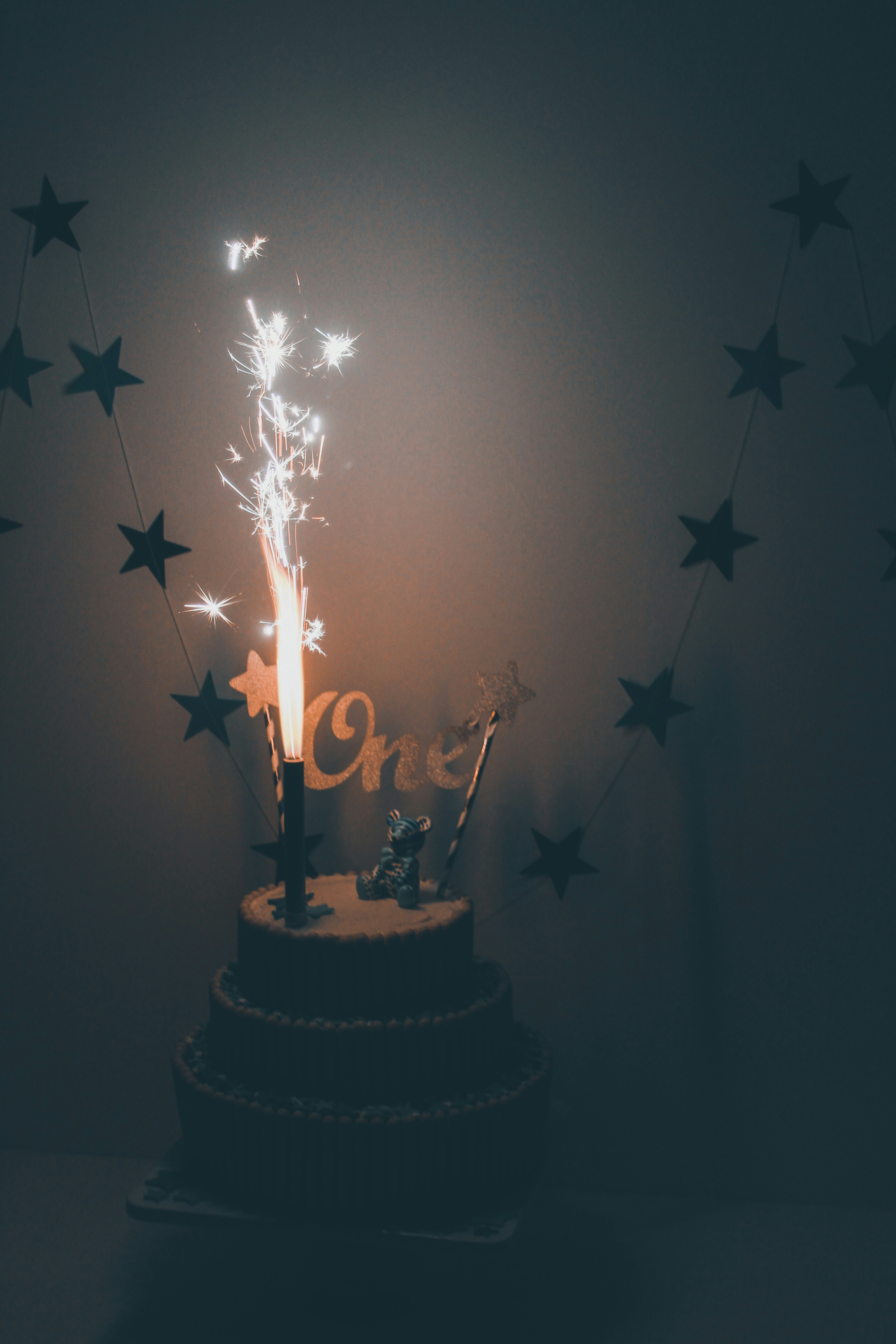
The Baby is Almost One

In two weeks and four days our baby– third baby, last baby– will be one. One: the lilypad from babyhood to something more. Not quite toddler, but getting too big to nurse, outgrowing booties, grabbing the spoon from my hand.

Not always, but plenty of times, I have held her in dark rooms rocking her to the shushing of white noise and willing my body to memorize hers. To know her weight at each age, knowing how my memory changed so quickly as my older children grew, my brain somehow erasing the previous stage to replace it with the child-shape in my arms. I have held her wanting to hold onto the moment, to her, or at least to know I was fully there, taking in as much as I could.

Not always, but a lot, I felt pure happiness just holding her, not wanting to lower her into her crib.

I haven’t planned her first birthday party, haven’t called it a party, even. It will be her, and me and her daddy and her siblings, and Nana and Poppy. A round little cake, a balloon, a candle, her crinkly-eyed smile. The crinkle of paper and her pudgy hands, clapping. It will be four days after Christmas, in that bridge of time between the biggest parties of the year, and I want it to be quiet. I don’t want anything to distract me from that one small flame. I’m so grateful for her, and for my motherhood, for her brother and her sister. The magical thinking of: if I can just love each moment enough it will make up for all the times I held my babies and wasn’t present, was angry or tired or hopeless, and didn’t love the moment enough. I didn’t know how fast it would go and that it would eventually be over, each babyhood year.

What does it mean that she is our last baby? Didn’t I think each baby was our last? I never bought a tiny cake pan to make their first birthday cakes. Each time I borrowed one, thinking, Oh, why buy something I’ll use so rarely, but also, I couldn’t possibly be this lucky again. Maybe that is the mark miscarriage leaves. Surely this was just a fluke. Or the strange insatiability: will I always want another baby, the way a child always wants another ice cream cone? Maybe it’s a type of hungry math– if I add and add and add, it will cancel out the heartbreak of those zeroes. Love doesn’t work that way, but hunger doesn’t understand that.

A mother of four, Maya Rudolph described herself in an interview as “addicted to babies,” and sometimes I feel that way. Not fixated, not obsessed, but habituated. To what? To the possibility? A mother of four. I’m exhausted with caring for three, and the road to Iris’s kindergarten year looks long, and still I find myself folding and storing away a few pairs of threadbare maternity leggings, a stack of my favorite onesies. Not in the keepsake boxes I’ve started for each child, but in an unmarked, mostly empty box in the basement. As if, like the unplanned first birthday, if I don’t think about it too directly I don’t have to face its meaning.

The keepsake boxes are labeled, layered. At the bottom there is the pink sweater Sky wore at four months, and on top are the pair of ballet shoes she just outgrew– too beloved to toss, too worn to save for her sister. There are the brown fuzzy booties that warmed Robin’s feet from January to May of his first year, turning him daily into bear cub, and there’s the orange astronaut jammies he loved so much, wore so often I can’t imagine them on Iris. And somehow there’s a box, too, for Iris: her going-home outfit that now looks improbably tiny, her first bathing suit that won’t fit next summer. I wonder how it could be over so soon. I wonder how to explain to myself that having another baby doesn’t bring the other babies back– not Iris as a newborn, not Sky at six months, not 9-month-old Robin, not the babies that faded away before they could be born.

How do I explain this to my heart? Not the organ, but very much the organ, too– its terrible, incredible pumping. The heart is the first thing I knew of each of my children, as a little feathery beating on a grainy screen. The heart is the part of me that has physically ached, each time I crossed the threshold of birth, with the weight of a love no one could have explained to me. And my heart is also something that isn’t flesh and doesn’t understand flesh’s finality. My heart wants to go back and forth through time, or suspend it, and linger in the nursery rocking each baby again.

This part of me isn’t rational. She’s very persuasive. I won’t give her the keys, but I also trust her to show me where to pay attention.

The baby is almost one and I haven’t planned a thing. Already she is pulling on my hands, pulling herself up to stand, laughing and wobbling into her next year.

And Saturday

IMG_0796

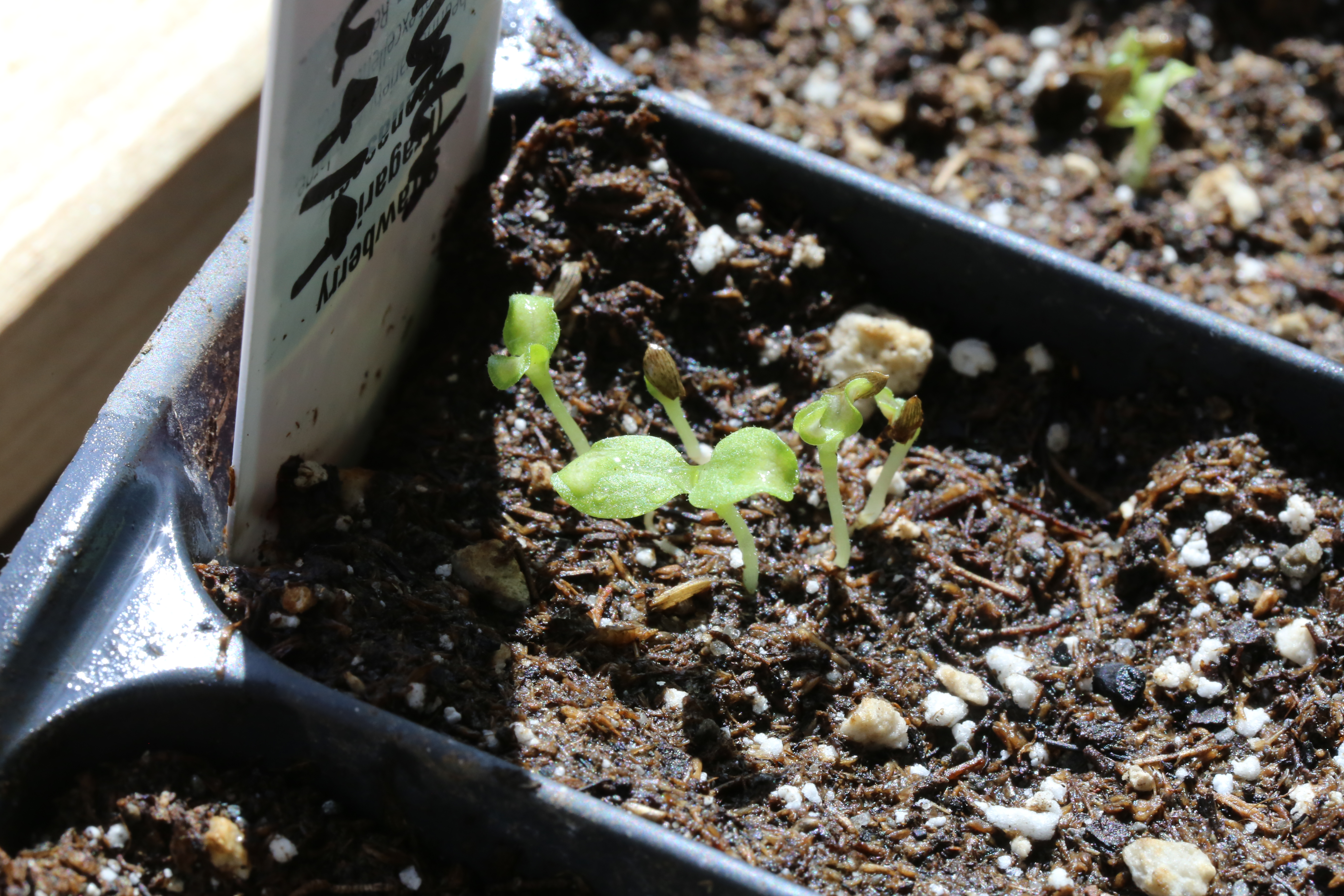
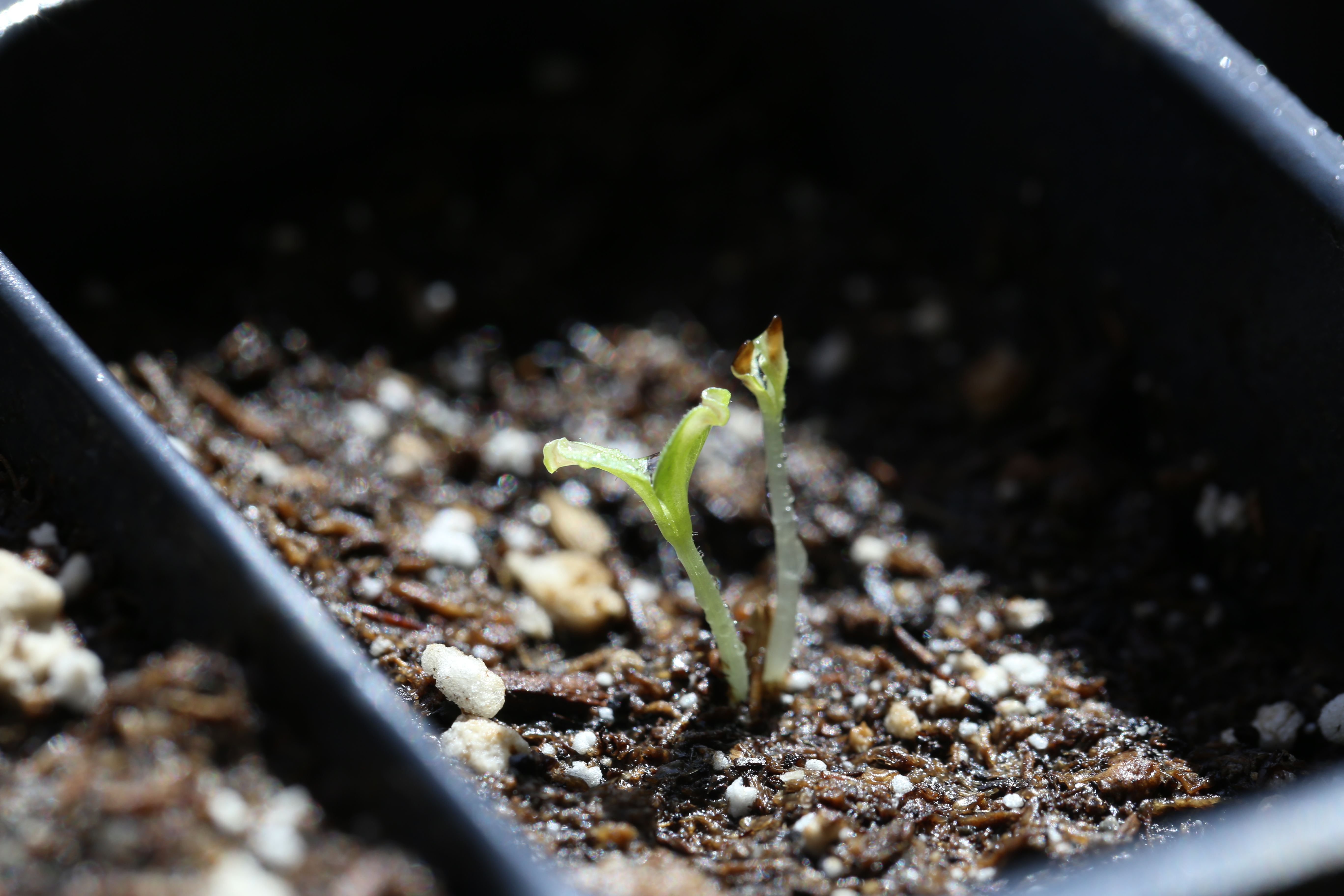
Like a lot of families, we have been starting seeds indoors. Delicate lettuce and nettle on the windowsill, sturdier basil, squash, and sunflowers on the back porch. With the quieter, slower pace of life during the pandemic, we have time to witness their growth. After very minimal effort on our part, after a week of watering and no sign of change, we start to notice the first movements of the first seeds, a barely perceptible shift from darkness into light.

It is the Saturday before Easter. In the chronology of the story of Jesus’s death and resurrection, Saturday is the and. Limbo time. Liminal. It is the day between two starkly different days. Between the painful, terrible truth of the death of a controversial, radically loving man, at the hands of the people he came to liberate, and the impossible, mysterious transformation of that death into supernatural forgiveness, into eternal life for him, and the promise of the same for everyone who chooses to take on the work of loving bravely and sacrificially.

On Good Friday, the man Jesus is put to death– his body hung on a cross, murdered, and buried in a cave, with a heavy stone rolled over the entrance. On Easter Sunday, his body is mysteriously absent from that tomb, and all kinds of strange, inexplicable things happen. He appears to his followers, not as an apparition but in his body– a changed body, but human flesh and blood nonetheless– to tell them to get up, to celebrate, because he is not dead but more alive than ever. And it just gets weirder and better from there. The whole story of Christianity begins there, on Easter Sunday when Christ rose from the dead.

But Saturday? Saturday is dark. Saturday is the heavy dark silence of the tomb, the feeling of no escape, no exit. Saturday is an eternity without Easter. Saturday is the finality of death, is death as the last word.

It strikes me that we are living in Saturday times. The pandemic feels like Holy Saturday on repeat. A Groundhog Day of in-between, of and, where death is the only thing that feels certain. It feels even more necessary, and even more difficult, to hope for Easter this year.

I think of my church, where I haven’t been since Christmas. In the Episcopal tradition, the cross is covered with cloth during Holy Week. We try to suspend our knowledge of the rest of the story. Having sung our last Alleluia the Sunday before Ash Wednesday, and with the Lenten season almost behind us, our mouths are parched with its absence. In years past, on Sunday after Sunday before Easter, I have had to stop myself from sliding easily into that familiar word, and so by Holy Saturday my whole body feels like it is leaning forward, at the edge of my seat, waiting for the word to flower on all of our tongues. At midnight, the Easter vigil marks the transition from death to new life, and with sunrise, Easter’s promise breaks through with light in the darkness. Alleluia: Praise the Lord. Joy and triumph.

Christians living after the crucifixion have the benefit of knowing this promise. We know the whole story at the outset: that inside of darkness there is light, inside of despair there is joy. This is the human story, the paradox of great suffering existing alongside great love, that Jesus came to offer us. But on Saturday, in Jesus’s time, his friends and followers didn’t yet know this.

So on Holy Saturday, we practice that not-knowing. And it is terrible. For me, it’s really hard to sink into that knowing, to allow myself to feel that bleakness, that absence of escape from the tomb. This year, it feels less like an intellectual exercise, and more of a reckoning with what I feel all around me.

What is the faith of the follower who does not know, has not yet experienced the return of Jesus, Love’s triumph over death? What did it feel like to be Mary Magdalene in the hours before sunrise? She does not yet know that when she goes to the tomb, she will find the huge stone moved from the entrance, the whole cave flooded with light, empty.

IMG_0810

So it is called Black Saturday, Joyful Saturday, Holy Saturday, Great Sabbath. And, and, and. All of these in one.

I feel like I am always, despite my meager prayers and my best efforts, the follower who does not yet know. Only in my most private moments of despair have I felt what I think of as Love breaking through, something I don’t think even approaches what I imagine Mary Magdalene must have felt when she saw the empty tomb and later her beloved teacher again. The certainty she must have felt with her body, canceling out her mind’s disbelief. I feel like most of the time I live my life inside of and, in limbo. My mind constantly fighting my body’s knowing that Love is alive and waits for me.

Inside this dark, endless Saturday of the pandemic, I struggle to make any movements toward faith. My prayers are wordless. My doubt and fear take up most of the space; keeping my hands busy and being present for my kids fills in the rest. The most I can do is try to keep a small space open in my heart for the possibility of Love’s return. I want so much to believe that life triumphs over death, but it’s hard to do. As it must have eventually become, even for Mary, once the shock wore off. Even after you see it, feel it, know it, it remains difficult to hold onto, because we are human.

So even though we are always in need of Easter, always in need of God’s mercy for our failures and mistakes, and the reassurance that we belong in Love, I feel it more deeply this year. I’m not even sure what that means at the literal level of the mind. It just feels like my body is leaning more heavily toward Alleluia, like my eyes can’t get enough of the sight of seeds sending out green shocks of light, breaking loose through dark soil.

IMG_0793

When You See the Heartbeat at Coffee + Crumbs 

1496066704917

In early June, my essay about waiting to miscarry appeared on Coffee + Crumbs.

“When You See The Heartbeat” is a short essay describing the two weeks between an unpromising first ultrasound just before Christmas, when the heartbeat was detectable but weak, and a second scan after the new year. Writing this essay helped me process the swirl of hope and fear I felt as I waited.

In January, we lost our hoped-for baby at 9.5 weeks, in the middle of one of the coldest, wettest, iciest winters in a city wholly unprepared for snow. It was a long and difficult winter. Spring’s arrival never filled me with as much hope and relief as this year.

On June 2nd, when this essay went up on the site, I had my first ultrasound for the baby I’m now carrying. This time, baby measured right on track with a strong heartbeat. I sobbed through that ultrasound, thinking of the baby we lost and this new little one we are so hopeful for. We are praising God that we’re at 14 weeks now, and praying this baby will be born healthy and full of life in early January of 2018.

I share this essay for anyone who is waiting, anyone who is grieving the loss of even the tiniest life. I share it in hope and with an outstretched hand if you are feeling alone in the middle of your own dark winter– even in high summer.

Photo via Coffee + Crumbs.