on truth and storytelling

I recently watched The Stories We Tell, Sarah Polley’s documentary of a family secret.  I found it fascinating. It’s a cinematic exploration of one of the most complicated, controversial issues in literary nonfiction. Whose truth is the truth? What truth can be harvested from the blurred terrain between fiction and nonfiction?

Polley turns the camera on her siblings, her father, and family friends, in search of the truth about her real birth father. But the truth is more complicated than the result of a paternity test. It is woven with deeper questions about identity and family, the individual and the community, authorship and storytelling.

Turning these ideas over in my mind, I was drawn to a short radio spot on a recent documentary that explores similar themes: Steve Lickteig’s Open Secret.

“What if everything you thought you knew about yourself was a lie?” Lickteig asks. “And everyone knew the truth except you?”

As a teen in a small town, Lickteig learns that the woman he thought was his older sister Joni was in fact his birth mother, and the woman he called Mom was actually his grandmother. Though he’s the main character in the story concerned, he’s the last to know.

What is it I find so compelling about Lickteig’s story, and Polley’s story? As a kid, I was equally fascinated by The Truman Show, for the way it seemed to capture, in fiction, something emotionally true about real life. I think we all hope, at an unconscious level, that one day something will explain what it is we’ve been missing. Perhaps growing up is about losing faith in the fantasy that wholeness can be found in a set of circumstances.

Lickteig’s and Polley’s stories are about family, and finding resolution. Through art, they describe their journey through pain and loss to forgiveness, healing, and understanding.

What if everything you thought you knew about yourself was a lie? This may seem like a stretch, but I think my personal fascination with this question has always been tied to faith. I see its persistence in my thoughts as a gift of restlessness, God leading me back to Him, like Herbert’s pulley.

Though the particulars are different, and the result worlds apart, there’s something in these stories that feels of a piece with the emotions I felt in conversion. There’s a paradigm shift that happens when we begin to conceive of ourselves in a new way. I began to look through new eyes at all I thought I knew about myself– the interests, preferences, accomplishments, and habits I thought made up my identity. Before, I used to hear language about “surrendering the self” and think only of loss. Instead, I’ve experienced an ever-deepening, widening freedom through serving God and knowing Jesus. It’s a path that has no end, that continues to show me more of myself in Christ and Christ in me. The more I let go of, the more I have to give.

I’m still fascinated by stories like these, and the relationship between story and identity. What about you?
antler on walking poets

I love this post on Antler about “Walking Poets.”

Adele Konyndyk writes about several poems that explore the experience of the solitary walk, including Raymond Carver’s poem “This Morning.” As a poet who walks– heck, as a human being who walks– I relate to the lines she quotes from Carver, who writes of that paradox of contemplative walking: how the body’s movement generates stillness for the restless mind. Being outside stills the walker’s mind, and he’s grateful for even just the briefest freedom from “All the things/ I hoped would go away this morning.”

For me, writing is as much escape from “all the things” as it is an entrance into them. When I walk, my thoughts have wider horizons to stretch out in. I’m not trapped in their spiral, in the hurry of the clock and the press toward efficiency. I am separate from my thoughts. I can walk them out.

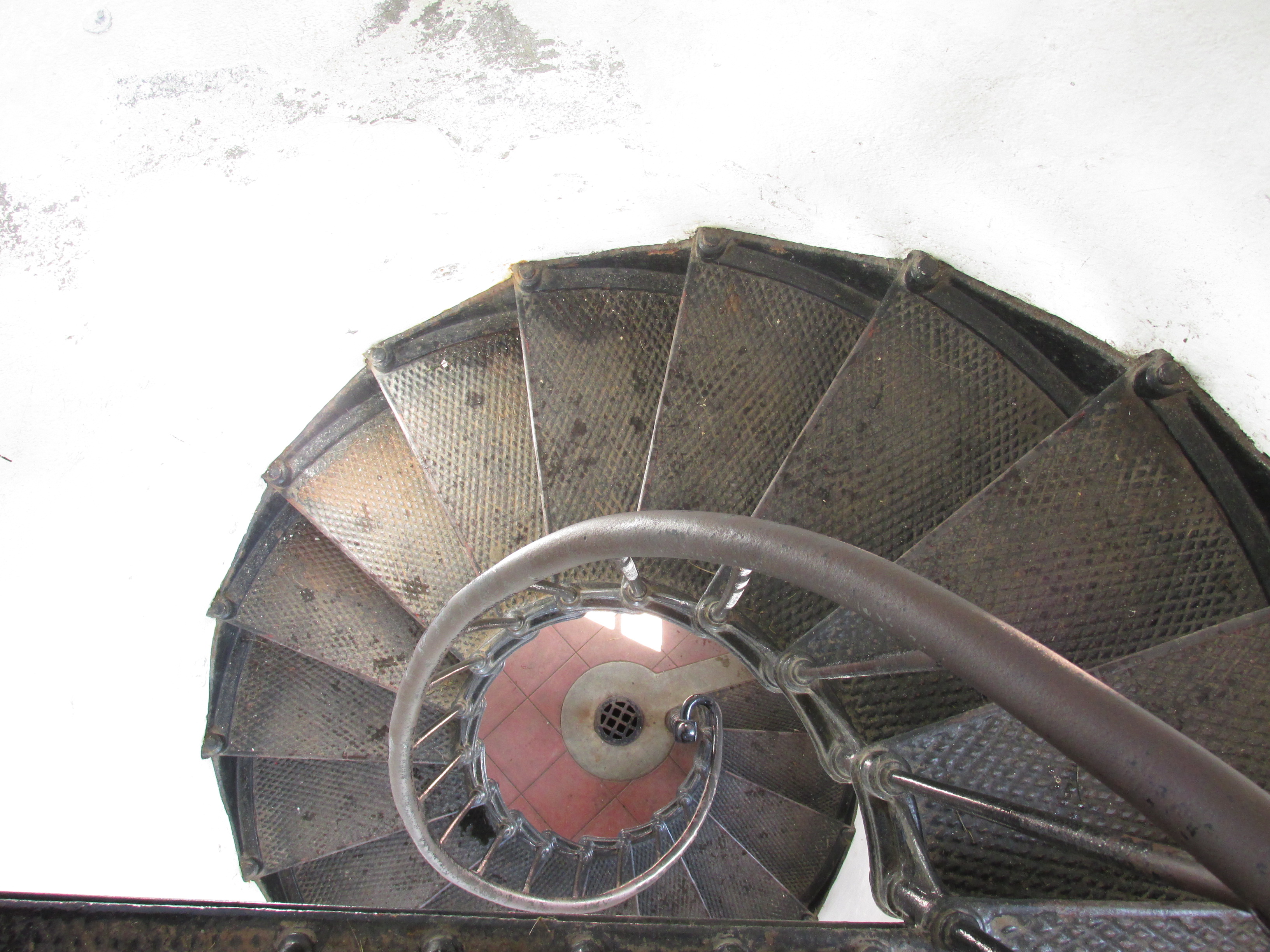
WhidbeyStairwell

When I lived in St Malo for a winter, I used to take daily evening walks– they felt like flights– around the wild, walled perimeter of the city. I liked walking into the furious wind that blew in off the waves. I liked the way the sun squeezed through the closing doors of the clouds, bruise-colored and alive. And when I got back to my little apartment, I liked the way my cheeks stung red and my head still roared with the echo of the wind.

Lines for poems have come to me on walks. Sometimes, drafts that I wrestle with at my desk seem to untangle themselves when I take them on the road.

This fall, I’ve had the pleasure of leading 52 high school freshman in a 10-week creative writing course. Together, we looked at a variety of different ways in which poets have documented a particular place through writing. And walking was central to several of these pieces. Among many shorter works, we read Alice Oswald’s Dart, Erik Anderson’s The Poetics of Trespass, Kaia Sand’s Remember to Wave, and Haryette Mullen’s Urban Tumbleweed.

One of my favorite exercises, which I borrowed from writer and teacher Jay Ponteri, was taking a tanka walk through the high school building. It’s based on Urban Tumbleweed, 365 tanka poems recording Mullen’s daily walks through Los Angeles, where she lives. The students and I carried scraps of paper and scribbled notes about what we saw, heard, thought, and felt during our 15-minute journey. Then we practiced writing a group tanka on the board, loosening the form’s traditional rules (a la Mullen) and allowing the poems to be simply 31-syllable poems, broken into three lines as we saw fit. The students wrote some astonishing poems: compressed, detailed, imaginative.

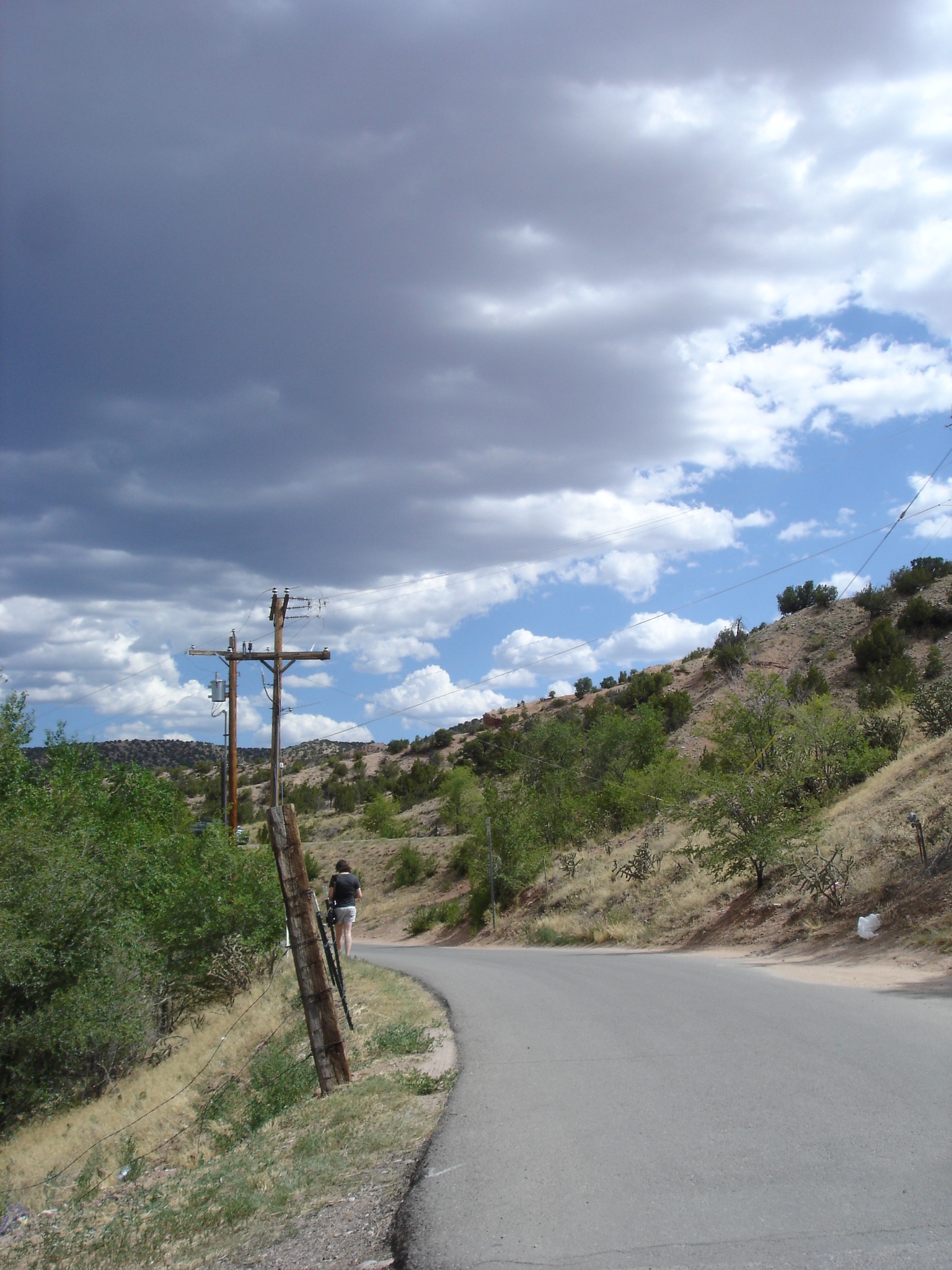
Walk

I think it’s movement that does this. Movement gets the rhythm of feet and heart into our thoughts, smoothing their disorder into pattern. It helps us make great leaps between inner and outer experience. It puts us back together again, by connecting the world of the mind to the world outside.

Kodyndyk writes:

I also see reading poetry as (to borrow an Antler phrase) a devotional practice for spiritual formation. Like poet Peggy Rosenthal, I believe that the very act of reading poetry is very much like taking a walk—that “its rhythms, its sound-echoes, its line-breaks and stanza-breaks, all conspire to give us pause.” Both walking and poetry are, to me, a kind of prayer.

I often pray when I walk, when for whatever reason I just can’t calm my mind enough to stit still. Walking is sometimes the best way to listen deeply, to “be still and know that I am God.” In the same way, writing poetry outside can be centering, quieting the mind’s chatter by focusing on language’s rhythms.

Carolyn Kizer writes: “Poetry is not prayer, but it is not not prayer.” I’m often hesitant to equate the two, because for me, they are very different, separate things. And yet, not so different. Not so separate. Perhaps walking is the best metaphor for the mystery at the center of these practices, for the moving Spirit that breathes through and animates everything.

a room (of one’s own) with a view

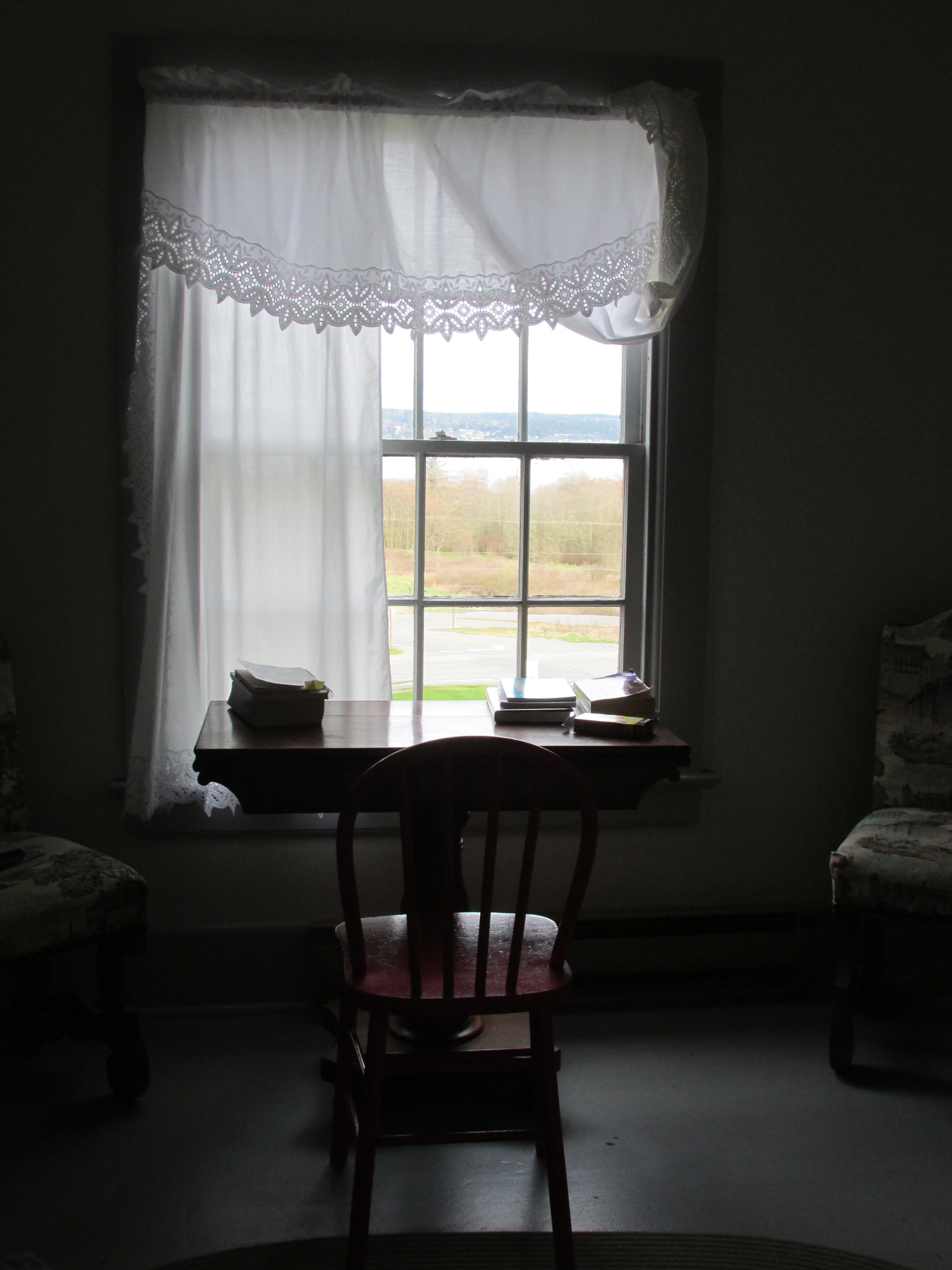
2012-03-22 00.27.18

I have dreamed of this table by the window since I was a little girl.

A small wooden table, a simple wooden chair, and a second-story window looking out over a body of water, green hills, trees. It’s tucked away, and no one can see me in the window, when I look up from the page.

The dream writing desk, the one I picture when asked about my ideal, looks just like this. And here I am, with a morning free to write and reflect at the dream desk.

This is my last residency week as an MFA student. On Saturday, I’ll graduate in a small ceremony, in the company of the community that has made it possible, kept me going, fed me and cheered me and inspired me for over two years. My parents will be there, and my husband, each of whom has played a central role in my development as a writer.

I’ve been taking it all in a little more deeply this last week. I’m stopping to listen to birdsong on walks along the Whidbey Island bluffs. Watching a doe lead her wobbly babies across the path, on my way to breakfast. Laughing along with my friends during morning lectures, or sitting around the living room in the evening.

But especially, I am soaking in this chance to get up early in the quiet of this old Officer’s house, a creaking Victorian from the turn of last century. I crawl out of bed and sit down at the table, cleared except for a notebook. I watch the sunrise and I write like I used to when I was little, with a notebook on my knees on a suburban front stoop. Alone, unwatched, not expected anywhere, not expecting anything.

I like being ignored, in a way. I like to slip away after dinner, to be left alone to stare off into space or down at the page, uninterrupted. I think it’s this quality of slipping away that the dream desk embodies. It’s a perch place, a place of perspective. Whether it’s a front stoop or a simple table, it’s a place where I can observe and reflect unobserved.