Marjorie Stelmach’s “After” in Image Journal

unsplash-plane-runway

Here’s my latest short introduction for Image Journal‘s Poetry Friday column. Marjorie Stelmach’s poem “After” is a tender and nuanced meditation on grief.

I love this weekly showcase of beautiful poems from the Image archives, and I especially love the challenge of writing the briefest of reflections on a poem. It’s getting me back into the habit of close, sustained reading that I cultivated during graduate school. Writing these intros on deadline is like making mini-annotations. I’m grateful for the invitation into the worlds of these poems.

Read Stelmach’s poem at Image Journal.

Take a Creative Leap & Receive a Gift

paintbrushes

Take a risk or leap with your creativity and tell me about it in the comments below. If your story grabs me, I’ll give you a one-year subscription to my favorite magazine.

Yesterday I received Issue 40 of Ruminate Magazine, in which my poem “Yellow” appears, winner of the Janet B. McCabe poetry contest. Entering the contest felt like a leap, after a hiatus from writing and submissions following my daughter’s birth.

It felt like recommitting to my dreams, and receiving the prize has been affirming and supportive. It’s helping me pay for childcare to work on my book. I’m grateful for a magazine that pays its contributors and runs contests like this one, because they’re committed to fostering and supporting a dynamic community of writers, artists, and readers.

To celebrate, I’d like to give the gift of a one-year subscription to a new reader.

Interested?

Comment below with a few words about your creative leap by October 4th, 2016. I’ll pick my favorite story and give a one-year gift subscription to this beautiful journal of art and faith.

Be bold. Submit your writing to a journal on your reach list. Apply for a grant or a fellowship. Undertake a new project. Reach out to a fellow artist and ask them to collaborate with you. Paint a big canvas when you usually work small, or a small canvas when you usually go big. Whatever feels like a risk or a long shot, try it.

I can’t wait to hear about it.

Photo via Unsplash.

***10/5/2016 UPDATE: Congratulations to Janaya Martin and D. Allen, who will both receive one-year subscriptions to Ruminate Magazine. I loved both of your stories and am excited to share this journal with you. Thanks to everyone who responded via email and social media, as well. Congratulations on all of your creative leaping. Keep it up.***


Reviving My Writing Practice Post-Baby

Bundles of Journals

My daughter was almost one before I began writing again. Her early months were all-consuming, and I simply didn’t have the spare energy to either write or worry about not writing. It was late May when I decided it was time to jump back in and figure out where I had left off. Staring at the haphazard pile of drafts and notebooks in my closet, I swallowed a nervous lump in my throat.

Where do I start?

I want to share some of what I’ve learned as I’ve stepped back into a regular habit of writing. Please note: this is not a how-to. I read so many how-tos during the anxious months of pregnancy and early motherhood, I now recoil at the very sight of a how-to infographic. The last thing any of us needs, parent or not, is another way to feel anxious, or another list of things to do.

As a parent and as a writer, I like learning from others and feel grateful for the people and resources that have helped me along the way. Friends texted us when we were struggling with our daughter’s sleep. Eula Biss’s On Immunity and a big fat history of vaccines helped me grapple with all the fear out there about immunizations. The moms and babies in my breastfeeding support group have shared snacks and hugs and recipes and tips with me as we each made our own way through our little ones’ first year.

So what I want to share here is, like so much of my parenting style, a big collage of trial and error and learning from others. It’s what is working now, but I know I will need to stay attentive and active so that I can respond to the changes in my writing and my family. That’s probably the biggest take-home here:

For me, reviving my writing practice has meant tuning into what works today, and taking one step at a time. It has meant being fierce—I will find time to write today because it’s important. And flexible—I will accept the amount and quality of time I have today, even if it’s five minutes, and trust that both will grow and deepen with time.

My goal is to finish a collection of poems, and write prose for paying markets, while continuing to be the primary caregiver for our daughter. Here are five things that are helping me as I reach for those goals.

1) I’m reading more, especially about writing.

It’s really, really easy to collapse on the couch when my girl naps and zone out on the Internet. This is what Steven Pressfield, in The War of Art, calls resistance. It’s easier to fritter away my time on Pinterest, in the name of researching dinner recipes or garden hacks, than it is to feel my fear about creating. That fear is currently tuned into my sense of time having accelerated since becoming a mom. I’m afraid I won’t ever have enough time to complete the projects I really care about, so I don’t even begin. You know what? It’s true. I don’t have enough time. I have slivers and bits and scribbled-on margins of time, littered all over the day. But I feel way more inspired and motivated when I use those margins of time purposefully. Now I try to sit down and write, or I read– especially about creativity and career. These are the books I’ve found most helpful so far:

Writer Mama, Christina Katz
Ordinary Genius, Kim Addonizio
The Artist’s Guide to Grant Writing, Gigi Rosenberg
Big Magic, Elizabeth Gilbert

Next step is learning how to be kind to myself when I choose Pinterest or Facebook or some stupid slide-show (Kid Stars of the 1980s! Where Are They Now?!) instead. Your tips requested!

2) I map out the weeks and months.
This spring, I signed up for an 8-week Fit4Mom class. Every Monday and Wednesday night for eight weeks, I worked out at 7:30. Period. When I finished those eight weeks, I felt great and saw a difference. I thought, Why not do this with writing?

Now I put writing time and deadlines into my schedule. To keep track, I use the free Monday Calendar app. I also have two whiteboard calendars: one on the fridge for family life, and one above my desk for writing deadlines.

3) I joyfully hitch my wagon to other wagons.
If you are a new parent, and especially what they (so unimaginatively) call a “stay at home mom,” you’re probably well-acquainted with loneliness. Writing can feel lonely, too. I love being able to connect with others about our writing goals and projects– sometimes while we push our kids in swings or pack them into the backpack for a hike.

From time to time, I connect over Skype with a couple of incredible women from my MFA program. We exchange work and critique via group video chat. The technology is hit-or-miss, so I am on the lookout for ways to improve that side of things. But I love the magic of suddenly being reunited with these powerful, compassionate writers. It still feels like sci-fi or Charlie’s Angels to me.

In the spring, a friend included me in a 40-day accountability email exchange. She had a goal and she just wanted a handful of people she was close to to “listen in” on her progress. I was so deeply impressed with her vulnerability and her courage. I read every one of her emails and rooted her on to success. What I learned was that it wasn’t about completing a task perfectly– it was about discovering more about herself and what she valued. So in August, I asked her to join me in a 30-day poetry challenge. I wanted to do something that scared me, like she had. It was scary. Some days I hated it. But I ended up with about ten poems I think I might actually be able to do something with– and that’s more than I’d written in the past two years combined. Holy sh**.

I’m super, duper excited about this next one: a monthly critique group that meets in the evenings. I just started this last month with a handful of friends. I really hope it becomes a long-term thing, because I love it. We plan to rotate houses, exchange work by email a week before each meeting, and keep the snack thing simple.

Last thing in terms of community: taking online courses. I tried one with Poetry Barn and wasn’t able to get through all of the assignments, but I did my best. This month I’m trying a class called Literary Boot Camp with Mothers Always Write and a Personal Essay Intensive course with Ariel Gore, in which we will somehow write the drafts of six essays in twelve days. Both of these just about scare the pants off me. But supposedly that’s how you know you should do something, right? Right…

4) I found a great babysitter, and I stay home and write.
There is no way–no way— I would take on the “6-essays-in-twelve-days” thing without a solid plan. That plan is called childcare. I feel like I struck gold with our babysitter. She works in early childhood education, lives in our neighborhood, and has a gentle personality that my daughter loves. My husband and I pay her well and give her presents because we want her to be our babysitter forever. In the past, I used the time to get out of the house or nap. Now I hunker down at my desk and write.

This automatically saves money on coffee and gas or lunch or whatever I used to do instead of staying home to write. It also has meant combing through our family budget to cut expenses and be able to afford childcare. I say “no” to a lot of small things so that I can say “yes” to one thing that matters a lot to me.  Which leads me to my last point…

5) I’ve let go of a lot of other things.
I’m an American mom in the 21st century, so there are oh, I don’t know, 82 things I think I need to perfect. Tell me I’m not alone when I say I have somehow got it into my head, as a woman in the United States, that after having a baby I need to focus on having a great body, stylish clothes, an amazing sex life, homemade homegrown vegan meals, a spotless and stylish house cleaned with homemade natural cleaners, and spend all of my time engineering crafty sensory-play activities for baby. Good grief.

Thankfully, there aren’t enough hours in the day. Thankfully, I believe in a God who loves me as I am and covers me with grace, because not only do I fall so very short of perfection, I also believe the lies of this culture and keep wandering down their hall-of-mirror detours. Writing is prayer for me, because I also really suck at praying. But when I write, I feel like I get in touch with who God made me to be, and everything else starts showing up the way it ought to. The important things look important again, and the silly things look really, really silly.

Caring for our daughter is in.
Writing is in.
Connecting with my family is in.
Basic self-care is in.
Everything else is bonus.

I am learning to simplify my exercise routine (… sometimes that means I don’t exercise, but progress not perfection, right?) and keep our weeknight meals really simple. This summer I got fed up with keeping house and kind of just quit. Turns out that isn’t sustainable for any of us, so last night my husband and I sat down over a glass or two of wine and made our very first chore chart. In five years of marriage and twelve years of living life together. I hope we survive this. (Just kidding– like everything I’ve written here, the chore chart is an experiment designed to help us figure out what works for us. I’ll let you know how it goes.)

The best part about writing again— writing even though I’m scared, writing instead of procrastinating, writing myself toward a career I have wanted since I was a little girl— the best part is that the more I write, the more I feel like… me.

I feel motivated to write. Ideas find me. I wake up with lines for a new poem or one in revision. I have more energy. I’m a lot happier and that means I am more focused when I’m with my daughter and family.

I don’t have this nagging sense of work left undone, of missing out on a life I want to live, because I’m living it.

Are you returning to a writing practice after becoming a parent? Please share your ideas in the comments. I’d love to learn from you.

Photo via Unsplash stock photos; Simson Petrol.

 

Poem Response on Vox Poetica

Here’s a poem I wrote in response to a photo prompt on Vox Poetica, a photo called Alberta Bound by photographer Michael Lee Johnson.

Mind

Stopped by the gate, you pace the place old
wheels have smoothed, tracks so worn

that’s all you see, never mind the fact
they cross over, go on. You believe

in the gate, though your lips shape
other words. Your hands trace the rubbed

wood, paint peeled—listen, you may as well
leave it here. There’s a way out that’s everywhere—

see how the sky goes around and through? Despite
the signs, forgiveness is the usual procedure: an inch

per century pushing up through plates.
The pace isn’t what’s important here. Out

in the estuary the same light grows, seeds
ripen and shake: little fists opening.

I love the tagline for Vox Poetica: “It’s just poetry. It won’t bite.”

I wrote this poem as part of a 30 day poetry challenge I’ve undertaken this August with a friend and fellow poet, and it’s helping me reaffirm that creativity is there in abundance. I don’t have to ration it or fear there won’t be enough. There is plenty there, and plenty of places and people to share it with.

Try writing a poem to a photo prompt from Vox Poetica, Rattle, or the 20 day poem challenge coming up at Ekphrastic Review.

Writing About Climate Change

Here’s a letter I wrote for Dear Earth With Love, a collaborative community chronicle of personal stories about climate change.

My dear friend Jo created this project. I encourage you to write your own letter to the earth, responding to your personal experience with climate change. It could be a letter, poem, story, song, or spoken word piece. It could be a video of a dance or performance; a painting, collage, or sculpture. Whatever medium suits you best, use it and make something– then submit your work.

Dear Earth With Love holds rolling submissions, with a deadline posted every few months.  The next deadline is August 31, 2016.

Read the beginning of my essay here:

Continue reading “Writing About Climate Change”

On Kristin George Bagdanov’s poem “More Strange” at Image Journal

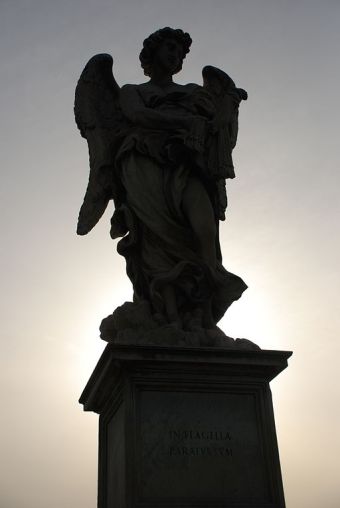
Angel_StatueI just started writing short introductions for Image Journal‘s weekly online feature Poetry Friday.

I love these assignments because they introduce me to new work and new poets, they get me engaged with a journal I love, and they get me thinking– not just about my craft but about my faith.

Especially the poem I recently read and wrote about.

Kristin George Bagdanov’s poem “More Strange” is a compact powerhouse of emotion and complexity. I’ve been thinking about it a lot these past few weeks, moving through some heavy sadness over the brokenness of our world, while simultaneously beginning to wean my 14-month-old. I’ve been feeling weighed down by the violence in the news and grappling with my vulnerability, wanting to protect my child from what I have so little control over. It’s easy to forget God’s sovereignty and providence. It’s all too easy to imagine that grief and pain have the last word.

So this poem has helped, and I’m so grateful when poems help. To me, this too feels like a small sign of God’s living presence– that art heals, that humans can be conduits through which healing can flow. It makes me grateful that I write, that God planted the seeds of an abiding interest in poetry when I was very young. (Thanks, Mom and Dad!)

Bagdanov’s poem is about the most intense grief I can fathom– Mary’s loss of her son– which becomes so much more than human grief, through the mystery of God’s saving grace.

Read Kristin George Bagdanov’s poem at Image Journal here.

Image: By MarcusObal (Own work), via Wikimedia Commons

Janet McCabe Poetry Prize


RUM_40_Cover_large

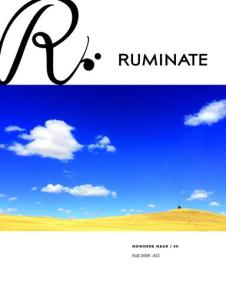
In late June, I learned that my poem “Yellow” won the 2016 Janet McCabe Poetry Prize at Ruminate Magazine. The poem will be published in the September 2016 issue.

Ruminate is one of my favorite publications, and its arrival in my mailbox is one of the small but great pleasures in my life.

It’s beautiful. It’s print. It still comes in the mail. And it’s quarterly, which means several months of anticipation between issues– a novelty in an age when it seems we hardly have to wait to read anything anymore.

I love how each issue takes shape around themes in a life of faith that sometimes go under-explored. I love the visual art it has brought into my life. Though my sister is a talented visual artist, and I always feel enriched on a different level when I make space for it in my life, I confess that I just don’t make that space on my own. So the magazine is a good reminder to make the time.

Continue reading “Janet McCabe Poetry Prize”

A tanka walk with Haryette Mullen

photo-1462774603919-1d8087e62cadInspired by Los Angeles poet Haryette Mullen and her book Urban Tumbleweed, today a group of students and I took a tanka walk around the Metropolitan Learning Center building in NW Portland.

Each writer made notes about their exterior and interior landscape. Walking quietly and carrying a small piece of paper, we wrote down what we saw, heard, touched, smelled, thought, and felt as we moved through the building.

This is one of my favorite activities, because I love writing and I love walking. Last year, I took a tanka walk with students at Cleveland High School, and I was so inspired by their creativity that I decided to take the project with me into my own backyard. Continue reading “A tanka walk with Haryette Mullen”

Thank you for your support!

I’d like to thank the people who sponsored my attendance at the Tupelo Press Perfect 10 workshop, which invites poets to bring twenty poems to the mountains for three days of intensive workshops in the company of other poets. With their support, I completed Split the World in Two, a collection of ten poems written or revised over the course of the weekend (October 31-Nov 2 in Truchas, New Mexico.) I also received invaluable one-on-one feedback on a chapbook-length manuscript. Many thanks to the following people, who sponsored me via Indiegogo in October 2014. You guys are awesome.

Cheryl Wallick
Amy Ridout
Bill Peters
Chris Warner
Mike Datz
Aaron Guest
Stephanie Langlais
Isabelle Ratane
Holly Ringland
Barbara Marsh
Robyn Steely
Sandy Parks
Evan Schneider
Julia Vanderham
Rachel Hammer
Celine Foucher
Megan Falcone
Patrick Poulin
Heather River
Nancy Poulin
Debra Conkey
Cathleen Greiner
Dave & Claudia Bennett
Tom Reeser
Cynthia Eggers
Bryce Poulin
Sharna Langlais
Bob & Kathy Crawford
Jim Renfro
Brett Poulin
Christa Easton
Autumn Reeser
Lonnie Handel


Why I Write

When I was eight or nine, my favorite book was How I Came To Be A Writer, by Phyllis Reynolds Naylor. I was fascinated by her story about being my age and writing, and how she managed to make her life as a working writer whose books I loved. This is a “spill” I did two summers ago, just before I gave a talk about “the writer’s desk” at show:tell, a summer camp for teen writers and artists. In it, I tried to answer some questions about why I write, how I write, and what success means to me as a writer.

I’ve written since I was very young. Before I could write, I would tell my parents stories and they would write them down for me, or make cassette recordings. Did they do this because stories spilled from me and it was a way to focus my young energy? I don’t know. I have a story called A Walk in the Woods, which I must have told my dad at age 4 or 5, and which he typed up so I could paste it (backward) into an old calendar and draw the illustrations. (It’s a funny mix of the plot for Cinderella and Hansel and Gretel, with a few horses thrown in and a cameo by my mom, eating a cheese sandwich with alfalfa sprouts. I think I hated alfalfa sprouts at the time and was working it out through story.)

When I began writing for myself, I would ask my parents for Mead spiral notebooks in bright colors from the drugstore, and fill them with poems. I liked to find a corner of the yard or the front stoop, away from the family bustle, usually at a quiet time of the day like just before or after dinner. Sometimes I wonder if the need for solitude and introspection came first, and writing simply became the means to facilitate that communion of self and bigger world.

My time on the porch was meditative, though I didn’t know anything about formal meditation. I sat and felt. I watched the light sink behind our suburban hill, lighting up the scrawny trees and washing the windowless sides of the stucco split-levels. There was some seed of fear planted in me, and a seed of tenderness and sweetness. I intuited that the world of adulthood that lay before me meant broken dreams. I was afraid of this, and I didn’t understand. So I sat on the stoop and tried to tune into this sadness and sweetness.  I loved the light, the birds, the flowers, even though everything in my neighborhood was pretty ordinary and repetitive.

I wrote it down, poem after poem about sunsets, clouds, trees, sky. For most of my childhood and adolescence, I wrote rhyming poems. I followed rhyme schemes and syllabic patterns without thinking much about it, just adopting whatever I picked up from songs and the little poetry I read at that point (Shel Silverstein, Robert Frost, Robert Louis Stevenson, Emily Dickinson).

Poem-making can be like braiding a rope and then climbing it, then continuing to braid as you go. The strange and mysterious part is how it bears your weight. You use it to bear your own weight. You are somehow held up even when you haven’t finished it yet. I write because making shape, form, sound, texture in language makes me feel supported and held in a world that can often feel unfocused, scattered, chaotic, confusing.

Growing up I filled notebooks with poems, occasionally revising them, sometimes making little books of the ones I especially liked. I didn’t share them with others at all. I wrote stories, kept journals, and read and read and read.

I think all of that early practice seeped into me and still shapes what I write, even though I mostly write in free verse, a loose kind of blank verse, or nonce forms—forms I make up as I go, and often deviate from as the poem dictates its own agenda. I think my attraction to rhyme and meter tuned my ear for opportunities to rhyme and make sound links, but I’m not often interested in adhering to a form in the finished draft. Sometimes I use form as a way to climb into a subject or a line. I’ll play with sonnets, haiku, villanelles, sestinas. Sometimes I’ll copy a favorite poem’s form, or write between the lines of a favorite poem. Sometimes, rarely, an exercise leads to a final draft that’s close to the original form assigned. More often, it’s a springboard to get my tongue loosened again.

I can be perfectionistic, and get temporarily obsessed by the time-card approach to process. How many hours should I spend at the desk per day? What time of day? So many writers insist on the same number of hours at the same hour, as a way to train the muse to meet you, to make a date with inspiration. I’ve courted this off and on during my life as a poet so far.

I don’t know what my definition of success is right now. I feel like it always changes. When I was younger, I assumed I would publish several books before I hit 30. Everyone said it would be difficult to make a living as a poet, but I mostly tuned them out and figured they just didn’t know I was destined for greatness. I would show them. I think there’s part of me that secretly still believes that (maybe everyone does?).

What I hold most fiercely to, and what hasn’t changed, is that writing is first and foremost a form of meditation for me. Especially when it comes to drafting poems. The best times are like a kind of self-hypnosis. Mary Oliver has written that she has come to understand that her job is just to pay attention. This is why I started writing poems and still write them. To pay attention. It becomes increasingly difficult to do.

“Writing is an act of attention. You are being conditioned all the time toward distraction and acceleration and away from contemplation. Fight it.” -Carolyn Forche